Review · BARCELONA
Barcelona: Gothic Quarter Walking Tour with Optional Tapas
Barcelona’s Gothic Quarter is best understood on foot, one narrow lane and old stone wall at a time. This tour connects Roman remains, medieval squares, La Rambla, the Cathedral, and the city’s political heart in about 2.5 hours, giving you a useful first look at central Barcelona.
I like the way the route joins big sights with lesser-known stories, including Emperor Augustus, Wilfredo the Hairy, St. Roque, and the origins of Catalonia’s flag. I also like the optional tapas stop, which adds a drink, local snacks, and time to ask your guide where to eat next.
The main drawback is simple: this is a walking tour with plenty of time on your feet, and you do not enter the monuments. The information also describes the activity as wheelchair accessible while warning that it may not suit wheelchair users or people with reduced mobility, so check carefully before booking.
Key points to know before you book
- Roman Barcelona in plain sight: Look for traces of the city founded under Roman rule as you move through the Gothic Quarter.
- A route through major squares: Plaza del Rei, Plaza del Pi, Nova Square, and Plaza de Sant Jaume each show a different piece of Barcelona’s past.
- La Ramblas connects the story: The famous avenue is not just a shopping street here. It helps explain how Barcelona grew toward the sea.
- A Cathedral viewpoint without an entry ticket: You see the Gothic Cathedral from the quarter, but admission to monuments is not included.
- Optional food at the finish: Select the tapas upgrade before booking if you want one drink and regional snacks at a local bar.
- Friendly, bilingual guiding: Tours are offered in English or Spanish. Sylvia has been praised for making local culture clear and keeping the tone light.
Why the Gothic Quarter is the right place to begin
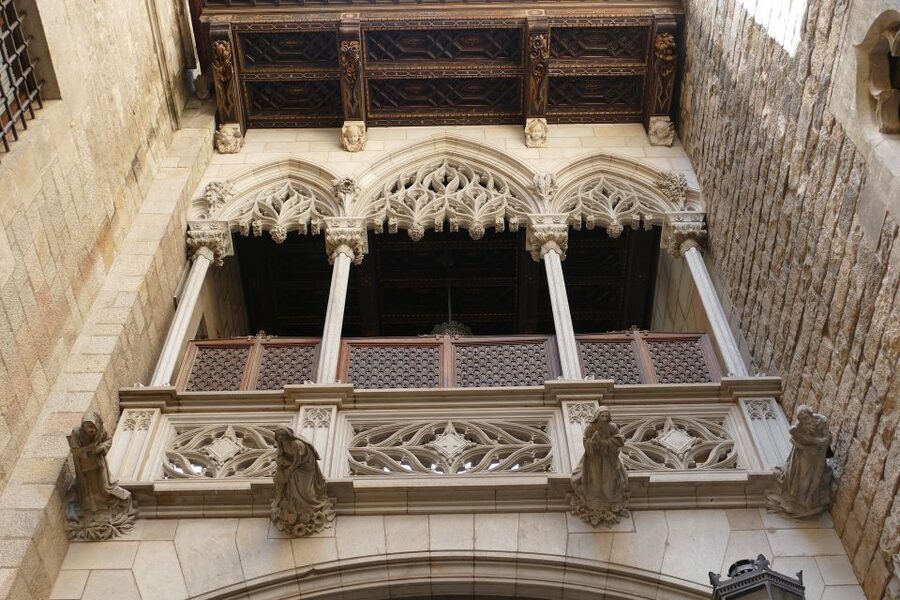
Barcelona can feel like several cities layered on top of one another. Gaudí’s modernist buildings draw the crowds, the beach pulls you toward the water, and broad avenues make the newer districts easy to cross. The Gothic Quarter is where the city’s oldest urban story comes into focus.
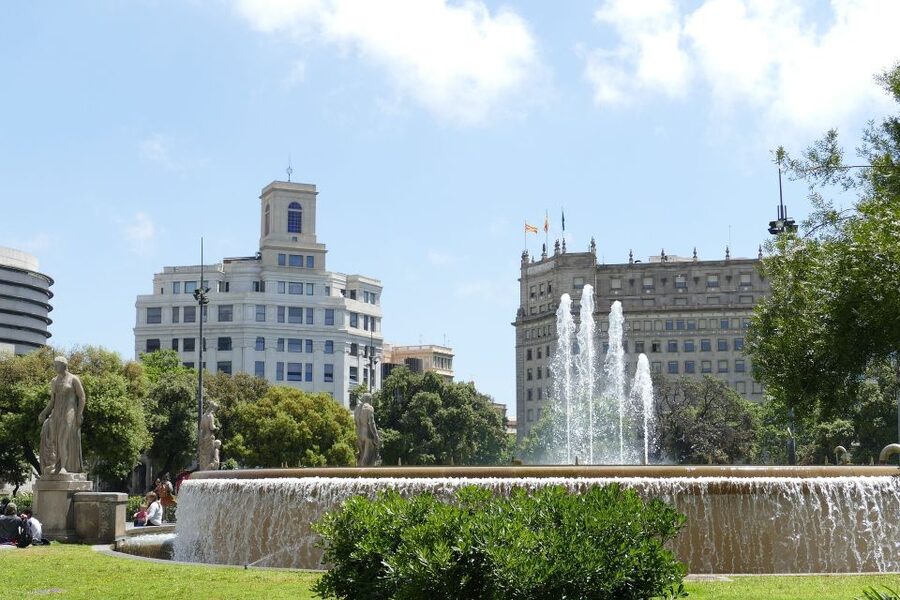
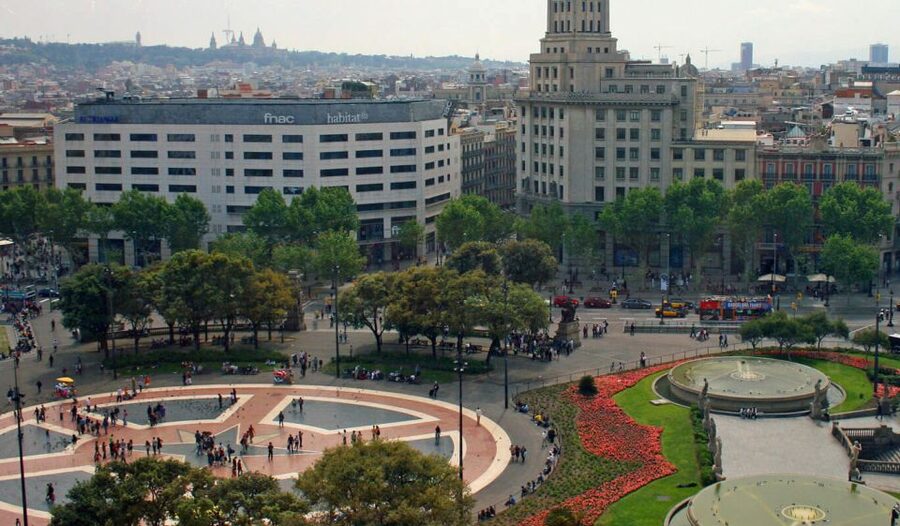
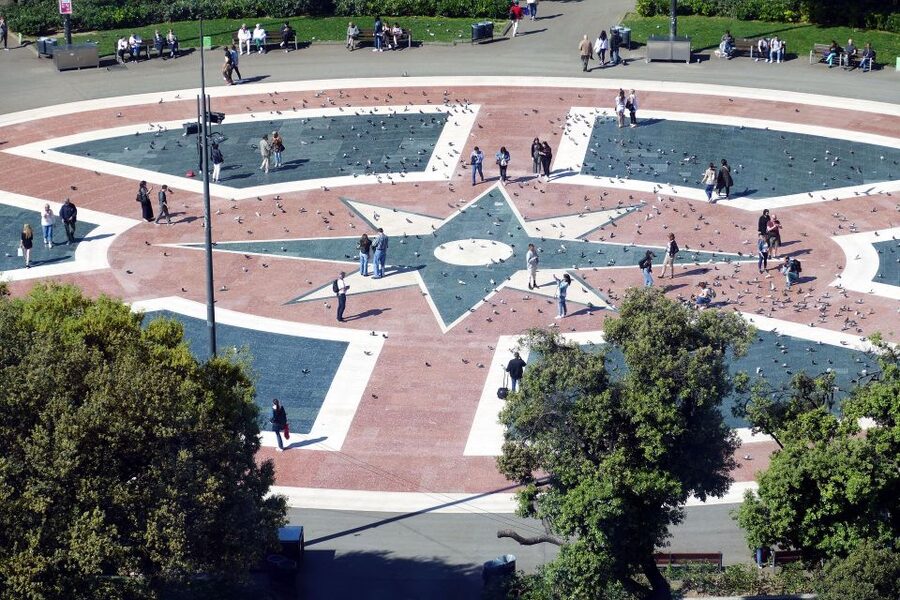
The route begins beside the Fountain of the Six Putti at Plaça de Catalunya. This is a useful meeting point because it sits at the edge of the old city and the newer central districts. Look for the guide carrying an Amigo Tours sign.
From here, you enter the Gothic Quarter with a guide rather than simply wandering from one pretty lane to the next. That difference matters. The quarter is full of fragments, but the meaning behind those fragments is not always obvious. A guide can connect a wall, a square, and a street name into one story.
I would take this tour early in your Barcelona stay. It gives you the basic map of the old center, and the final conversation over tapas can help you plan the rest of your meals and sightseeing.
More Old Town Tapas Walks in Barcelona
- Barcelona Gothic Quarter Tapas & Taverns Food & Wine Tour
★ 5.0 · 1,470 reviews - Barcelona: El Born and Gothic Quarter Wine & Tapas Bar Tour
★ 4.8 · 674 reviews - Barcelona Old Town Tapas Tour: Vermouth, Bites & Hidden Gems
★ 5.0 · 627 reviews
Following Roman Barcelona toward La Rambla
One of the first themes is Barcelona’s Roman foundation. The guide explains how the city was founded under Emperor Augustus, giving you a starting point for understanding why the old center has such a compact shape.
The Roman material here is not presented as one grand archaeological site. You are looking for remains and traces within the modern streets. That makes the experience more like reading a city than visiting a single monument. Keep your eyes open as the guide points out pieces of the old city and explains how later Barcelona grew around them.
The walk then reaches La Rambla, Barcelona’s famous avenue. It is easy to treat La Rambla as a quick route between Plaça de Catalunya and the port, but the tour uses it to explain the city’s growth. You hear how Barcelona developed from its older core toward the waterfront.
That context gives the avenue more meaning. You are not simply crossing a crowded tourist street. You are following the direction of the city’s expansion, from the old inland settlement toward the port.
La Rambla can be busy, so stay close to the guide and keep your attention on the explanations. The street is part of the experience, but it is not the quietest section of the walk.
Old walls, narrow lanes, and Nova Square
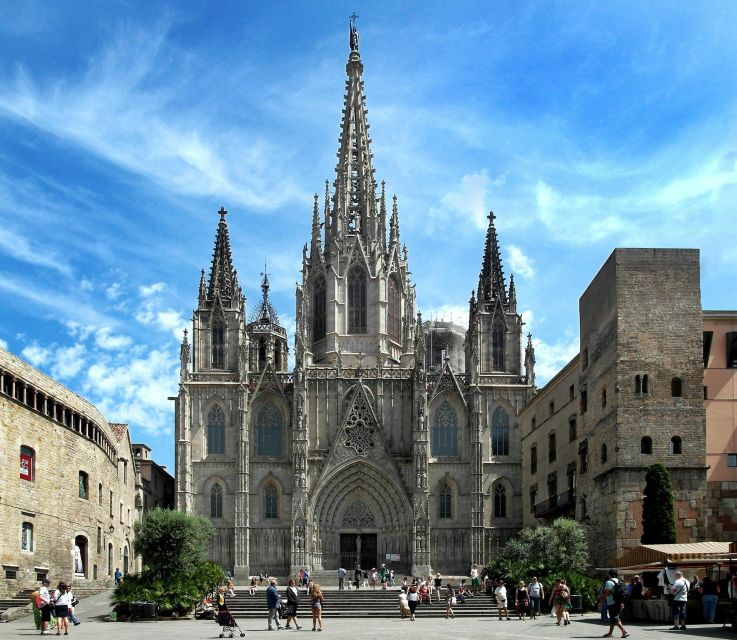
Near the old port, the route brings you toward remains of Barcelona’s former city wall. This is one of the most useful parts of the walk for understanding the Gothic Quarter’s shape.
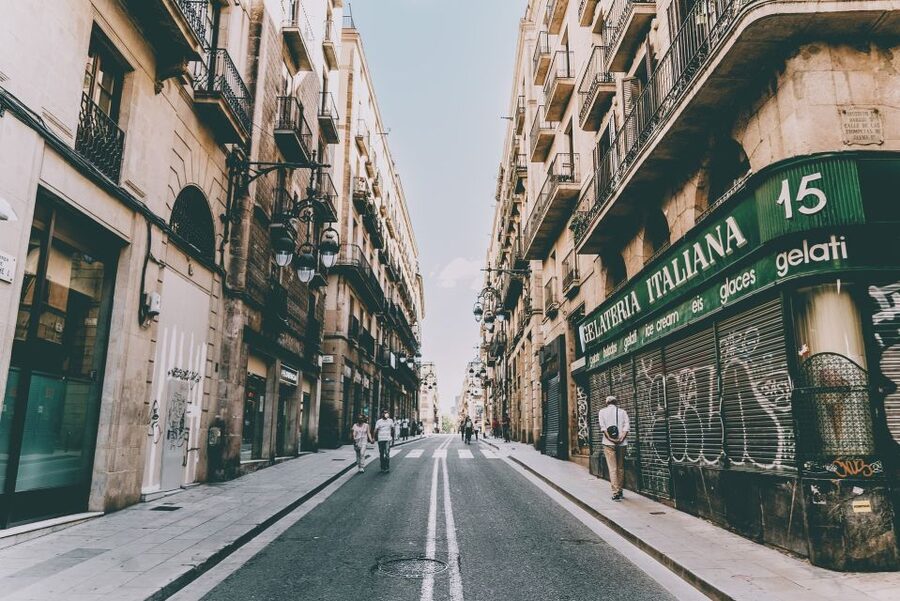
The old wall marked a boundary. Inside it, streets were narrow and buildings crowded together. Outside it, the city could grow in new directions. As you move through the quarter, you can see how the medieval street plan still affects the way people walk through central Barcelona today.
The narrow lanes are atmospheric, but they can also make it hard to know exactly where you are. That is one reason a guided walk helps. You do not need to stop every few minutes to check a map or wonder if you have missed a major square.
The route continues to Nova Square, in the center of the Gothic Quarter, where you can admire Barcelona’s Cathedral. The cathedral is one of the major visual rewards of the walk. Its Gothic design fits the quarter around it, with old stone, tight lanes, and open space gathering around the building.
Remember that the tour does not include monument tickets. You can see the Cathedral from the route, but entering it is a separate plan. If the Cathedral is a top priority, ask your guide about visiting at another time and check entry details yourself.
Stories of St. Roque, Wilfredo the Hairy, and Catalonia
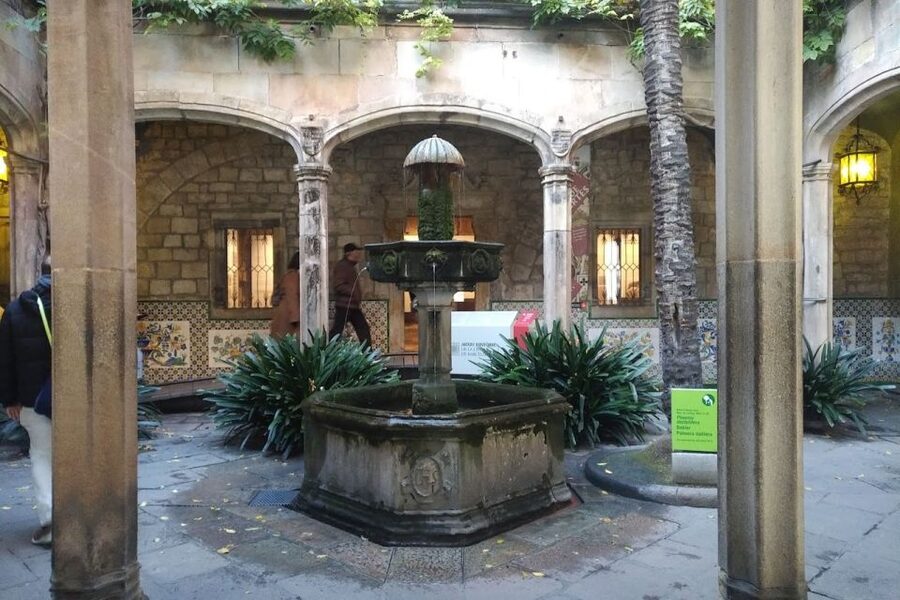
The tour is not only a parade of buildings. It also introduces figures linked to Barcelona and Catalonia.
You hear about St. Roque and Wilfredo the Hairy, among other historical characters. These names can pass quickly if you are not familiar with Catalan history, so listen for the larger point: Barcelona’s identity has been shaped by religious traditions, medieval rulers, and regional politics.
The explanation of Catalonia’s flag adds another layer. The tour describes how its current design developed, turning a symbol you may see on buildings and souvenirs into part of the city’s political and cultural story.
This kind of detail is valuable because it moves beyond dates and construction styles. You get a sense of why Catalan identity matters in Barcelona today, without needing a long lecture or a specialist background.
The guide’s tone is important here. One of the strongest parts of the experience is the balance between education and humor. Sylvia, one guide praised by name, is described as clear, friendly, and able to keep the subject light while still taking the history seriously. Guides can vary, of course, but the tour is designed around live explanation rather than a recorded script.
More Tapas Walking Tours in Barcelona
- Barcelona Tapas and Wine Experience Small-Group Walking Tour
★ 5.0 · 5,804 reviews - Barcelona: Tapas Walking Tour with Food, Wine, and History
★ 4.8 · 4,261 reviews - Barcelona: Food Walking Tour with Tapas and Wine
★ 4.9 · 2,180 reviews - Barcelona Tapas Walking Tour: Food, Wine & History
★ 4.5 · 1,928 reviews
Plaza del Rei and Plaza del Pi
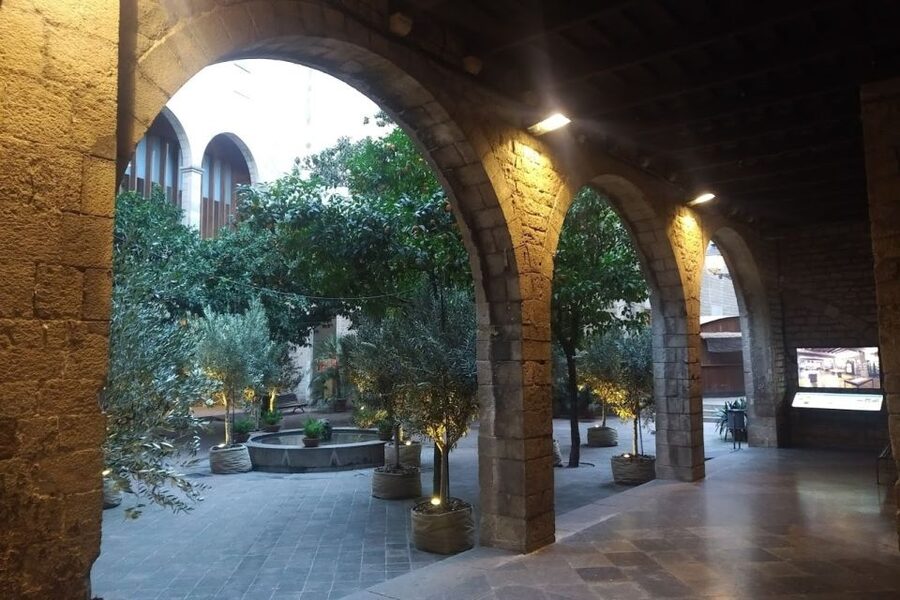
The walk continues through Plaza del Rei and Plaza del Pi. These squares give you a change of pace from the narrow lanes.
Plaza del Rei is tied to Barcelona’s medieval past and feels more enclosed and formal. It is a good place to pause and let the guide explain how the old city functioned around royal and civic spaces.
Plaza del Pi offers another view of the quarter. Here, the open square helps you appreciate the relationship between the church, surrounding buildings, and small streets feeding into the plaza.
I like this part of the route because the stops are close together but do not all feel the same. You are not spending the entire walk on one long avenue. The sequence shifts between lanes, walls, churches, and squares, which keeps the tour moving.
The drawback is that this remains an orientation tour, not an extended architectural study. You will hear the main story and see the outside of important places. If you want long visits inside the Cathedral or other monuments, you need to arrange those separately.
Plaça de Sant Jaume, the city’s political center
The final major stop is Plaça de Sant Jaume, the current administrative and political center of Barcelona. This square brings the historical walk into the present.
Here, you see the town hall and the Palau de la Generalitat. The two buildings represent the city and Catalonia’s regional government, making the square a fitting end to a route that has covered local identity, medieval power, and Catalan symbols.
This is also where the tour’s earlier stories come together. The Roman city, the medieval quarter, the growth toward the port, and modern Catalan administration are not separate subjects. They occupy the same central streets.
Plaça de Sant Jaume can be an especially useful place to revisit later on your own. Once your guide has explained what you are looking at, the buildings are easier to recognize when you pass through the quarter again.
The walk finishes in the Gothic Quarter rather than returning to Plaça de Catalunya. That is convenient if you want to continue exploring the old city, but you should not expect transportation back to your hotel. Transport is not included.
What the optional tapas stop adds
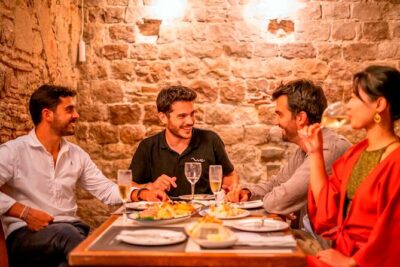
The tapas option lasts about 30 minutes and includes one drink plus local tapas and snacks. You must choose this option before booking. It is not something you can assume will be added at the end.
For many people, this is the best part of the upgrade. The walk gives you the historical frame, and the bar stop gives you a relaxed place to ask practical questions. You can ask your guide for food suggestions, neighborhood advice, or ideas for the rest of your time in Barcelona.
The food stop is not a full meal. Think of it as a small regional tasting with a drink, not a replacement for dinner. If you are hungry after a 2.5 hour walk, you may still want a separate meal afterward.
The tasting also makes the tour feel less rushed. Without it, the experience is focused on landmarks and explanations. With it, you have a few extra minutes to talk with the guide in a less formal setting.
I would choose the tapas option if this is your first day in Barcelona and you want local advice. If you already have firm dinner plans or prefer to keep the tour short, the basic walking option may be enough.
Price, timing, and physical effort
At $28 per person, the basic tour is reasonably priced for a live, bilingual walking experience lasting about 2 to 3 hours. You are paying mainly for the guide’s interpretation, route planning, and local context. Monument tickets and transportation are not part of the cost.
The value is strongest if you want a useful introduction to the old city rather than a private tour or a series of paid entrances. The tour covers a lot of ground, including La Rambla, the old port area, the Cathedral, several historic squares, and Plaça de Sant Jaume.
Wear comfortable shoes. The route includes narrow streets and a lot of walking, and there may be limited chances to sit. Barcelona’s old center is not designed like a modern pedestrian attraction, so uneven surfaces and crowded passages may make the walk tiring.
The accessibility information needs careful attention. The activity details label it wheelchair accessible, but the specific warnings say it may not be suitable for wheelchair users or people with reduced mobility. Since the route involves substantial walking through the old quarter, contact the provider before booking if this affects you.
Tours are offered in English and Spanish with live commentary. The duration is listed as 2 to 3 hours because the optional tapas portion adds time.
You can cancel up to 24 hours before the start for a full refund, and you can reserve now while paying later. Those terms are useful if your Barcelona schedule is still shifting.
Who will get the most from this walk
I would recommend this tour to first-time visitors who want to understand central Barcelona before exploring it alone. It is also a good fit if you enjoy stories about city formation, local politics, old walls, and cultural symbols.
Families with older children may like the steady movement and short historical stories. The tour is educational, but the guide’s style is intended to stay friendly and light rather than academic.
It suits you less well if you want to enter several monuments, avoid long walks, or spend much of the day seated. The Cathedral and other landmarks are viewed from the route, not treated as long indoor visits.
The experience also works well for people who want a local conversation at the end. The optional tapas stop gives you a chance to ask for recommendations while the Gothic Quarter is still fresh in your mind.
Should you book the Gothic Quarter tour?
Book it if you want a clear first map of Barcelona’s oldest center, a guide who can connect Roman remains with medieval streets and modern Catalan life, and the option of a small tapas stop afterward.
Choose the tapas upgrade if you value local food advice and a relaxed finish. Skip it if you already have dining plans or want to keep the outing closer to the basic walking time.
Do not book it expecting monument entry or a slow, fully accessible route. For everyone else, $28 buys a practical introduction to the Gothic Quarter, with enough history to make your later wandering more rewarding.
FAQ
Where does the Barcelona Gothic Quarter tour begin?
Meet your guide next to the Fountain of the Six Putti at Plaça de Catalunya, 31, 08002 Barcelona. The guide carries an Amigo Tours sign.
How long does the tour last?
The walking tour takes about 2.5 hours. The full experience lasts 2 to 3 hours when the optional 30 minute tapas stop is included.
Is the tour available in English?
Yes. The tour offers live commentary in English or Spanish.
Does the tour include entry to the Cathedral?
No. Tickets to monuments are not included. The route lets you view the Cathedral and other landmarks from outside.
What does the tapas option include?
The optional upgrade includes one drink, tapas, local snacks, and regional food at a local bar. You must select it before booking.
Is transportation included?
No. Transportation is not included. The tour finishes in the Gothic Quarter.
Is the tour suitable for wheelchair users?
The activity information labels the tour wheelchair accessible but also says it may not be suitable for wheelchair users or people with reduced mobility. Contact the provider before booking if you need accessible arrangements.
Can I cancel for a refund?
Yes. You can cancel up to 24 hours in advance for a full refund. You can also reserve now and pay later.
Just added to the tapas trail around Barcelona
- Barcelona: Guided Rooftop Wine Tasting – Enjoy 6 Spanish Wines★ 4.5 · 61 reviews
- Wine & Cava Penedes Tour: Wineries, Wine Tasting and Tapas★ 5.0 · 5 reviews
- Barcelona: Bike or eBike Tour, Top Sights & Local Insights★ 5.0 · 47 reviews
- Barcelona Sailing Experience: Spanish Tapas and Premium Open Bar★ 4.5 · 34 reviews
- Barcelona’s Most Terrific of Tapas Tours in the Gothic quarter★ 5.0 · 2 reviews
- Barcelona Morning Tapas Crawl by Food Tour★ 5.0 · 45 reviews
- Tapas Bike Tour Barcelona★ 5.0 · 8 reviews
- Barcelona Tapas & Wine Private Tour in Traditional Taverns★ 4.5 · 60 reviews
Old Town Tapas Walks, plate against plate.

Valencia Old Town Tour with Wine & Tapas in 11th Century Historic Monument
Read our review →
Barcelona Gothic Quarter Tapas & Taverns Food & Wine Tour
Read our review →
San Sebastian Old Town Pintxos & Wine Tour Small Group Tour
Read our review →
Madrid Historic Centre Food Tour with Authentic Tapas & Wines
Read our review →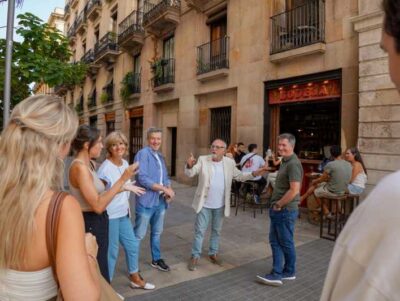
Barcelona: El Born and Gothic Quarter Wine & Tapas Bar Tour
Read our review →
Barcelona Old Town Tapas Tour: Vermouth, Bites & Hidden Gems
Read our review →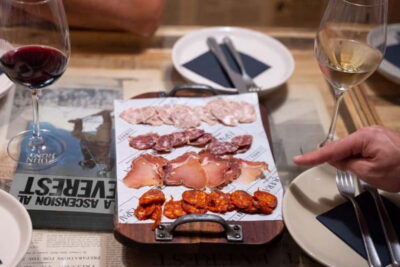
Barcelona Old Town Tapas Night: Hidden Bars, Cava & Vermut
Read our review →