Review · MADRID
10 Tapas Cooking Class Experience in Madrid with Sangria
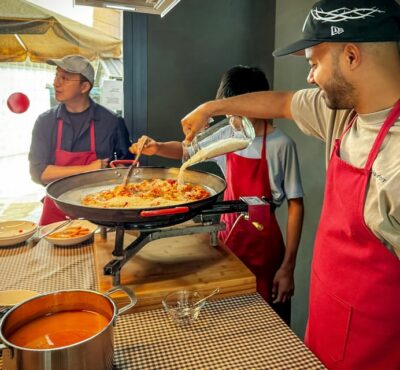
Madrid’s tapas tradition makes more sense when you cook it yourself. In this small-group class, you’ll work with a chef such as Gustavo or Rosa to prepare up to ten shared dishes, from gilda skewers and patatas bravas to garlic shrimp and Spanish omelette. Then you sit down to eat the meal you helped create, with sangria included.
I like the wide range of dishes and the social setup, which gives solo visitors, couples, and families an easy way to meet people. I also like that the chefs explain practical methods you can repeat at home. The main drawback is that ten tapas is a lot for one 2.5-hour class, so instructions can move quickly and you may prepare only part of each dish rather than cooking every recipe from start to finish.
Key points to know before booking
- You cook a shared menu of up to 10 tapas, not ten individual plates for each person.
- Gustavo and Rosa are praised for clear English, humor, and helpful instruction, with assistants helping keep the kitchen moving.
- The 4pm start and 2.5-hour length make this a useful evening activity before dinner plans.
- Sangria is included, but a nonalcoholic replacement may be only a soft drink.
- The group can include up to 15 people, so you get hands-on tasks but should not expect a private lesson.
- Dietary planning matters: the menu is not fully adapted to restrictions, and there is no complete vegetarian version.
Cooking ten tapas in central Madrid
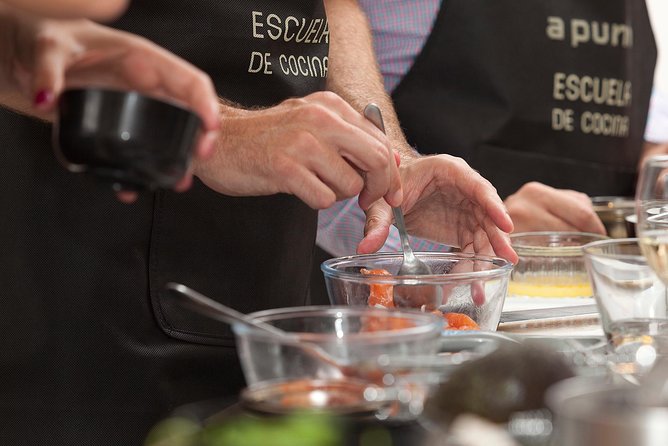
The class begins at A Punto Cooking School on Calle de la Farmacia, 6, in Madrid’s Centro district. You’ll need to make your own way there, since hotel pickup, drop-off, and transportation are not included. The meeting point is near public transportation, which helps if you are coming from another part of the city.
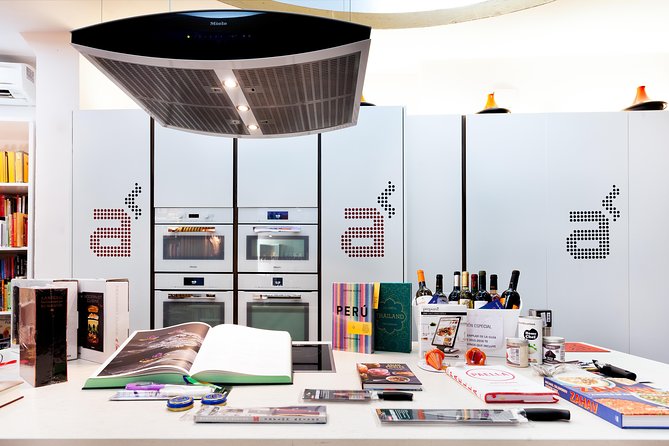
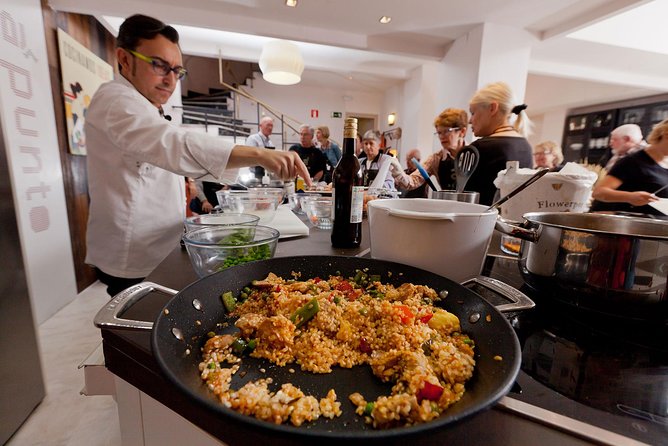
At 4pm, the class gets underway in English. The school uses a large cooking space arranged in an L shape. That layout lets several small groups work at once, with the chef moving between stations and an assistant helping with ingredients, cleaning, and supplies.
The group limit is 15 people. That is small enough for you to receive a task and ask questions, but it is not the same as a private cooking lesson. The class works best when you enjoy sharing jobs and talking with the people around you.
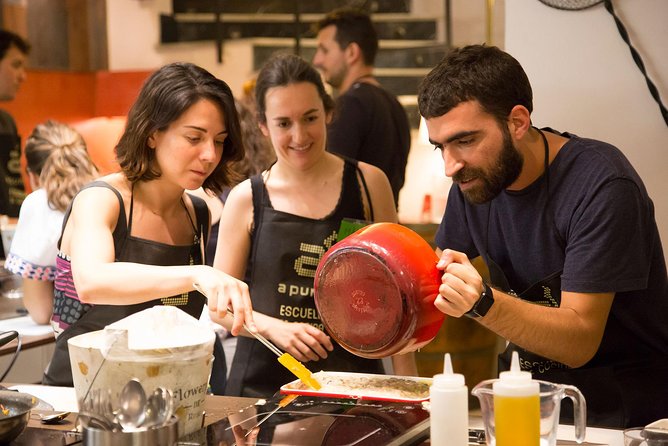
The format is cooperative. Each person usually handles one task, or works at one station, while the finished food is placed on the table for everyone to share. This is an important detail when you decide what you want from the class. You will take part in the cooking, but you will not necessarily make all ten dishes independently.
More Spanish Cooking Classes in Madrid
- Spanish Cooking Class Paella Tapas and Sangria in Madrid
★ 5.0 · 1,340 reviews - Madrid Tapas & Paella Cooking Experience with Local Market Visit
★ 5.0 · 432 reviews - Taste of Spain: Tapas Cooking Class with Bottomless Wine Pairing
★ 5.0 · 414 reviews
What you actually cook
The menu covers a good cross-section of Spanish flavors. The exact balance may vary, but the listed dishes include cold soup, cheese, seafood, fried potatoes, omelette, sandwiches, skewers, and dessert. That variety is one of the class’s strongest features.
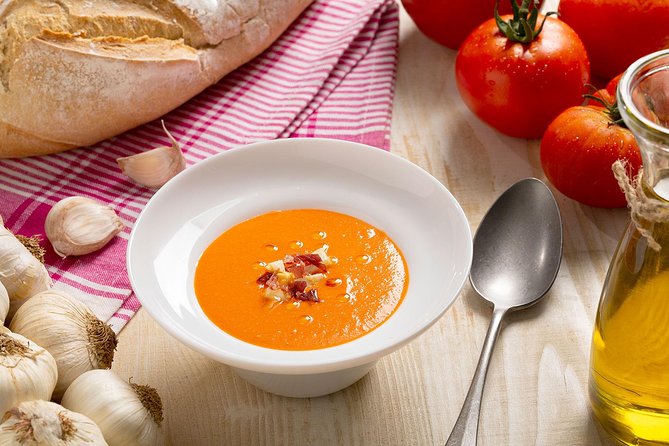
You may begin with salmorejo, a thick cold tomato soup associated with southern Spain. It is simple in appearance but depends on good tomatoes, olive oil, and the right texture. This is the kind of dish where a short explanation from the chef can help you understand why Spanish cooking often uses a few strong ingredients instead of a long list of seasonings.
The Idiazabal cheese lollipops add a playful touch. Idiazabal is a sheep’s milk cheese from northern Spain, and turning it into a lollipop gives you a presentation idea that is easy to remember. You may not make a full portion alone, but you can still pick up a serving trick for a party at home.
Coca, described as a Spanish-style pizza from the Balearic Islands, may be topped with sobrasada or vegetables. This brings a regional specialty into a class centered on Madrid. It also gives you a useful comparison with Italian pizza: the base and toppings follow a Spanish approach, with the ingredients doing much of the work.
The seafood dishes include ajillo shrimp, cooked with garlic and plenty of olive oil, and a Madrid favorite, the fried squid sandwich with alioli. The squid sandwich is especially local in character. It is a casual Madrid classic, and making it in a kitchen class gives you more context than simply ordering one at a bar.
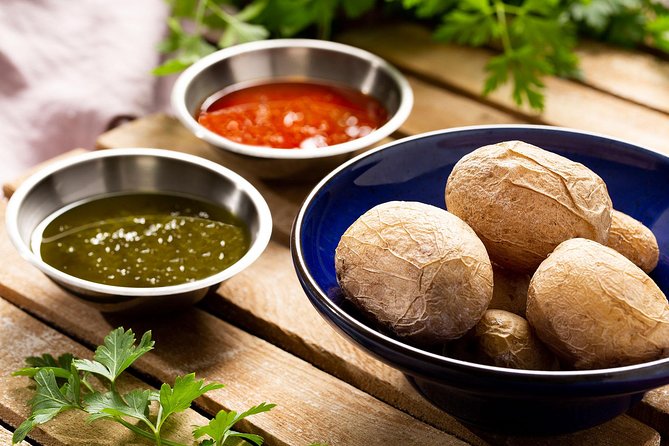
You will also prepare patatas bravas, the fried potato dish served with spicy tomato sauce. This is one of the most familiar tapas outside Spain, but the sauce is where the personality lies. Pay attention to the chef’s advice here, since the balance between potato, oil, spice, and sauce makes a bigger difference than the short ingredient list suggests.
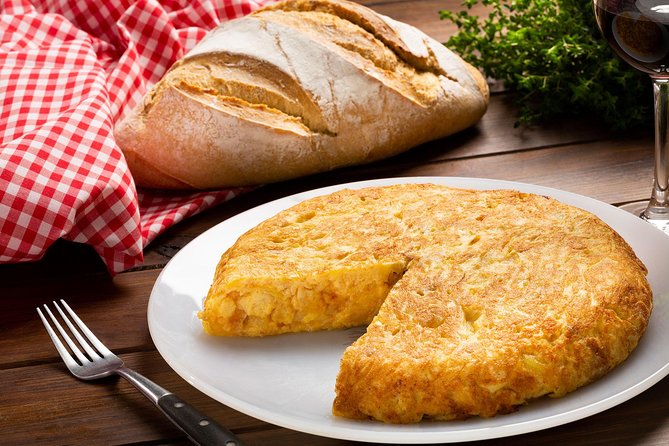
The Spanish omelette brings another basic but important lesson. You choose whether to include onion, a question that can spark strong opinions in Spain. The class presents it as a practical dish with potatoes and an optional onion choice, so you get a small but genuine taste of a famous Spanish food debate.
For a cold or room-temperature bite, there are gilda skewers, made with olives, anchovies, and other ingredients. These are quick to assemble and show how a tapa can be more about balance than complicated cooking. Salty, sharp, rich, and fresh flavors meet in one small serving.
Dessert is horchata torrijas, a version of French toast made with horchata, the sweet rice or nut-based drink associated with the Levante region. It is a nice finish because it connects a familiar dessert technique with a distinctly Spanish ingredient.
Sangria is made with fresh fruit and spices. It is included as part of the experience, and it helps set the relaxed tone of the meal. If you do not drink alcohol, tell the school when booking. The stated alternative is a soft drink, not a special nonalcoholic sangria, so this is worth knowing before you pay.
A class led by Gustavo or Rosa
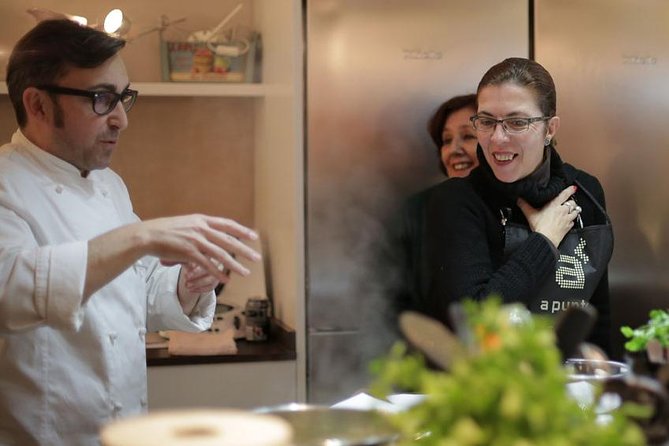
The instructor can vary, but Gustavo, also called Gus, is frequently named as the chef leading the class. Rosa is another instructor associated with the experience. Both are described as engaging, patient, and clear in English, and Gustavo is noted for mixing cooking guidance with food history.
That mix is useful. You are not simply following a recipe card. You learn why certain foods belong to particular parts of Spain and how familiar dishes fit into local eating habits. The historical comments are part of the value, especially if you want more than a basic group meal.
Gustavo’s style appears to be lively and informal. He keeps people involved, answers questions, and encourages each person to take a turn. Rosa is praised for her energy and cooking tips. An assistant, including Carmencita in some sessions, helps participants and keeps the work areas supplied.
The teaching approach is practical rather than formal. You will get instructions, watch demonstrations, and then work with the group. Since there may be ten or more dishes in progress, the chef has to move at a good pace. One useful tip is to choose the station or tapa that interests you most when the tasks are assigned. That gives you a better chance of learning the technique you care about.
The social side of the cooking school
This is a good pick if you want an activity that naturally brings people together. You will cook in a group, share jobs, and eat the finished dishes at the end. The format makes it easy to meet people from different places without forcing a formal introduction round.
It also works well for a family with older children. The minimum age is 14, and the class offers several kinds of tasks, from assembling skewers to preparing ingredients and cooking hot dishes. Anyone under 18 can join, but the minimum drinking age is 18, so younger participants will not be served sangria.
Couples can expect a more social experience than a romantic private dinner. Families should expect some standing, shared work, and a busy kitchen. Solo visitors may find this one of the easier Madrid activities for meeting people, since every dish creates a reason to talk.
The school does not allow parties, and you should not book if you are celebrating a group larger than five people. That rule keeps the focus on the class rather than turning the kitchen into a private party venue.
More Sangria and Tapas Tours in Madrid:
- Madrid: Paella & Sangria Classes- Seafood, Chicken & Vegan option
★ 5.0 · 265 reviews - Madrid: Paella and Sangria Workshop with Tapas
★ 4.9 · 128 reviews - Authentic Paella in Madrid: A Hands-On Class with Tapas & Sangria
★ 4.0 · 7 reviews - Barcelona Paella Cooking Class with Market Visit, Tapas & Sangria
★ 5.0 · 2,531 reviews
Why the 2.5-hour schedule matters
The class lasts about two hours and 30 minutes and begins at 4pm. That timing is practical for an evening in Madrid. You can spend the morning and early afternoon sightseeing, then head to the kitchen for a late afternoon activity and an early dinner.
The schedule also explains the quick pace. Ten tapas, a dessert, drinks, cleanup, and a shared meal all have to fit into one session. You should expect an active class, not a slow, detailed lesson devoted to one recipe.
Some participants find the opening instructions a little fast. That is not surprising given the menu size. If you want to remember the recipes, take mental notes and ask questions while your station is active. The class may provide recipes, but you should not rely on receiving a full printed cookbook afterward.
The upside is a substantial meal. By the end, you have sampled many different preparations instead of eating one main dish. Some sessions may also have enough food for leftovers, though you should not count on that as part of the formal inclusion.
Is $82.24 a fair price?
At $82.24 per person, this is not the cheapest way to eat tapas in Madrid. You can order several small plates at a bar for less, especially if you are only looking for food.
The comparison changes once you count what is included. You receive a cooking class, ingredients, a home-cooked dinner, sangria, and a souvenir apron. You are also paying for instruction, kitchen space, staff, and an organized evening activity in central Madrid.
I think the value is strongest if you want participation. If you simply want to taste Spanish food, spend the money on a few tapas bars and choose your own dishes. If you want to learn techniques, meet people, and turn dinner into an activity, the price is easier to justify.
The class also gives you dishes that are simple enough to repeat at home. Salmorejo, patatas bravas, gilda skewers, Spanish omelette, and sangria do not require advanced equipment. That practical side makes the experience more valuable than a meal you enjoy once and forget.
Dietary needs and drink choices
You must advise the school of dietary requirements when you book. The menu is not fully adapted to restrictions, so you should not assume that every dish can be changed.
There is no complete vegetarian menu. Almost half of the proposed tapas are vegetarian, but seafood, anchovies, squid, and other nonvegetarian items remain part of the overall selection. If you avoid meat but eat some animal products, you may have several dishes available. If you need a fully vegetarian class, this is not the right choice.
The same caution applies to allergies. The supplied information does not promise a separate preparation area or a fully altered menu. Contact the provider before booking if your restriction is serious.
Sangria is included, but the nonalcoholic replacement may be a soft drink. That is a fair point to consider when comparing the price. The experience is built around food and social cooking, but the included drink has limited flexibility.
Who should book this Madrid cooking class?
I would choose this class for a first visit to Madrid if you want a relaxed introduction to Spanish food and do not mind working as part of a team. It is also a good match for anyone who enjoys cooking but does not need a formal, step-by-step lesson on every recipe.
It suits:
- Couples who want an activity beyond museums and sightseeing
- Families with children aged 14 or older
- Solo visitors who like meeting people through shared activities
- Food lovers who want to learn dishes they can make at home
- Visitors who prefer a full shared meal to a short tasting
I would hesitate if you want a quiet dinner, a private lesson, a completely vegetarian menu, or a detailed workshop focused on just one or two recipes. The class is energetic and social, and the number of dishes means you will share the work.
The current score is 4.8 from 137 ratings, with 94 percent recommending it. That fits the experience’s main strengths: friendly instruction, fresh ingredients, a fun group atmosphere, and plenty of food. The repeated praise for Gustavo, Rosa, and their assistants also suggests that the instructor makes a real difference to the evening.
Practical details for your Madrid plans
The class starts at 4pm at C. de la Farmacia, 6, Centro, 28004 Madrid. It finishes back at the meeting point. Plan your route in advance because transportation to and from the class is not included.
Confirmation is provided when you book, and the activity accepts mobile tickets. Service animals are allowed, and the location is near public transportation.
You can cancel for a full refund up to 24 hours before the start time. Changes or cancellations made less than 24 hours before the class are not accepted for a refund. The activity also requires a minimum number of participants, so if the provider cancels because that minimum is not met, you will be offered another date or experience, or a full refund.
Should you book it?
Book it if you want to cook, eat, and talk, rather than simply sit down for dinner. The range of ten tapas, the helpful English-speaking chefs, and the included sangria make it a satisfying introduction to Spanish food.
Go in with the right expectation: you are part of a team, not the sole cook for ten separate recipes. Accept the quick pace, choose a station that interests you, and tell the school about dietary needs before arrival. With that understanding, this is a strong Madrid activity for food-focused visitors who value a shared experience and practical recipes more than a private or highly technical lesson.
FAQ
Where does the tapas cooking class meet?
The class meets at A Punto Cooking School, C. de la Farmacia, 6, Centro, 28004 Madrid, Spain.
What time does the class start?
The class starts at 4pm.
How long does the cooking class last?
The experience lasts approximately two hours and 30 minutes.
Is the class offered in English?
Yes. The activity is offered in English.
How many people can join the class?
The class has a maximum of 15 participants.
What food will be prepared?
The menu may include salmorejo, Idiazabal cheese lollipops, coca, ajillo shrimp, Spanish omelette, gilda skewers, a fried squid sandwich with alioli, patatas bravas, horchata torrijas, and sangria.
Is sangria included?
Yes. Homemade sangria with fresh fruit and spices is included.
Can I request a vegetarian menu?
There is no complete vegetarian option. Almost half of the proposed tapas are vegetarian, but the whole menu is not adapted for vegetarians.
What is the cancellation policy?
You can cancel at least 24 hours before the start time for a full refund. Cancellations or changes made less than 24 hours before the experience are not refunded or accepted.
Just added to the tapas trail around Madrid
- Madrid: Private Tapas & Wine Food Walking Tour in La Latina★ 5.0 · 4 reviews
- Madrid Food Tour – Tapas Walking Tour★ 5.0 · 3 reviews
- Culinary tour “Tapas & Wines” in Madrid★ 5.0 · 3 reviews
- Private Wine & Gourmet Tapas Tour in Madrid with Sommelier★ 5.0 · 49 reviews
- Try Madrid Best Churros, Tapas & Market by FLT★ 5.0 · 37 reviews
- Tasting Madrid: Tapas Private Guided Tour (Customizable)★ 5.0 · 7 reviews
- Flamenco show & tasting Tapas with panoramic views in Madrid★ 4.5 · 6 reviews
- Small Group Tapas Tour in Madrid★ 5.0 · 4 reviews
Sangria and Tapas Tours, plate against plate.
Barcelona Paella Cooking Class with Market Visit, Tapas & Sangria
Read our review →
Spanish Cooking Class Paella Tapas and Sangria in Madrid
Read our review →
Barcelona Food Tour: Tapas, Paella, Sangria & 8+ Local Tastings
Read our review →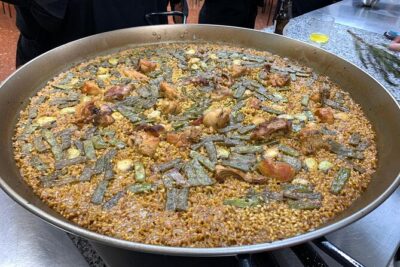
Valencian Paella Cooking Class, Tapas & Sangria – Evening
Read our review →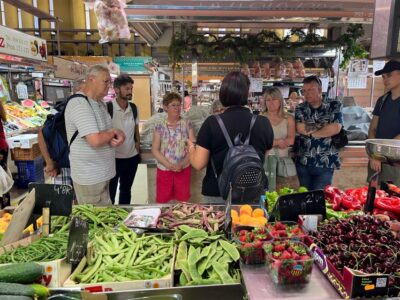
Real Paella Cooking Class – Market Visit & Sangría Workshop
Read our review →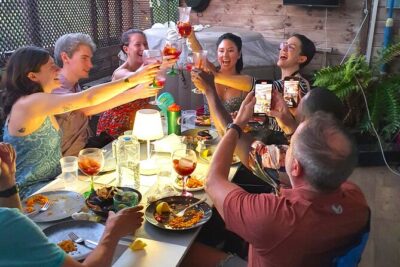
Madrid: Paella & Sangria Classes- Seafood, Chicken & Vegan option
Read our review →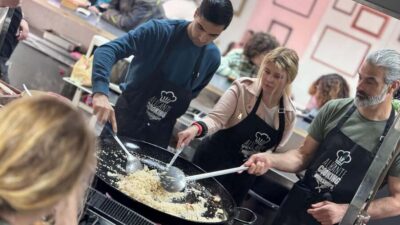
Alicante: Paella & Sangria Class with Tapas and Market Visit
Read our review →