Review · MADRID
Spanish Cooking Class Paella Tapas and Sangria in Madrid
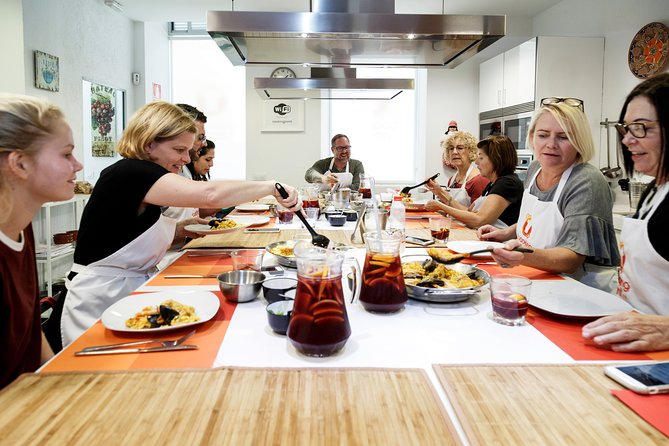
Madrid’s best cooking lesson may begin before you reach the kitchen. In the morning class, you walk to a local market with your chef, choose ingredients, and learn how Spanish food moves from market stall to table. Then you return to Cooking Point and prepare paella, gazpacho, salad, and sangria with a partner.
I like the genuinely hands-on format and the chance to ask about Spanish eating habits while you cook. I also like the small maximum group of 12, which gives Angel, Teresa, Elisa, or Eduardo room to guide beginners without turning the class into a cooking show. The main catch is simple: choose your session carefully. The morning class centers on paella, while the evening class focuses on tapas and does not necessarily include paella.
Key points to know before booking
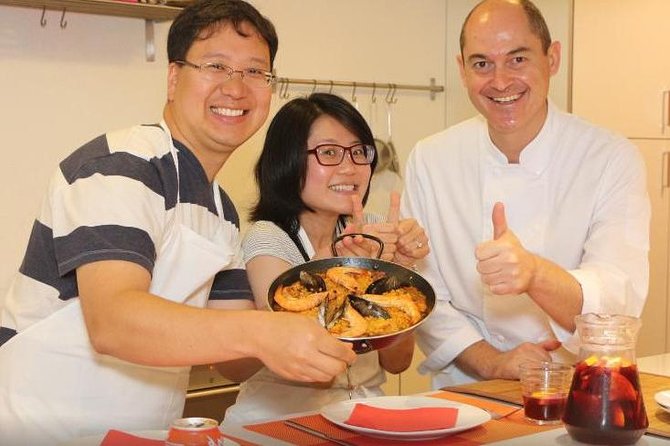
- Morning means market and paella: Shop for ingredients with the chef, then prepare paella, gazpacho, salad, and sangria.
- Evening means a full tapas spread: Make tortilla española, garlic shrimp, chorizo in cider, patatas bravas, tomato bread with ham, crema Catalana, and sangria.
- You do the cooking: Ingredients are prepared for the class, but you still take part in the chopping, mixing, cooking, and finishing.
- The class is social: You work in pairs, and solo participants are matched with a cooking partner.
- Dietary needs can be accommodated: Tell Cooking Point about restrictions when you book.
- The meal is generous: Several people found they had enough food to take leftovers home.
A Madrid cooking class built around doing, not watching
This four-hour experience takes place at Cooking Point, at Calle de Moratín 11 in Madrid’s Centro district. The location is near public transportation, and the activity begins and ends there. Hotel pickup is not included, so you will need to make your own way to the kitchen.
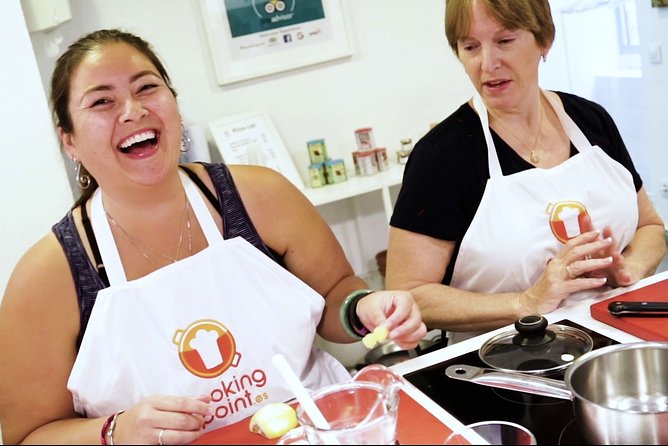
The format is friendly and practical. You work with an English-speaking local chef, usually in a group capped at 12 people. Pairing keeps the class moving and makes it easier for you to share tasks. If you arrive alone, the staff matches you with a cooking buddy rather than leaving you to work by yourself.
That detail matters. Cooking classes can feel awkward when you are handed a recipe and told to fend for yourself, or when the instructor does everything while you watch. Here, the balance is better. The chef demonstrates, explains, and steps in when needed, but you still handle the food.
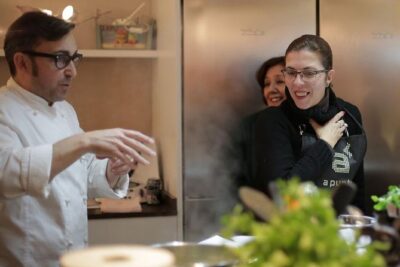
The teachers bring different personalities to the room. Angel is described as witty, patient, and good at bringing the whole group into the conversation. Teresa brings energy and humor, while Elisa is personable and clear with instructions. Eduardo combines a calm teaching style with a strong grasp of Spanish food and market ingredients.
You cannot request a particular chef based on the information available, but the repeated praise for all four instructors suggests a consistent teaching approach. Expect plenty of food talk, practical tips, and conversation about Spanish culture rather than a silent kitchen lesson.
More Paella Cooking Classes in Madrid
- Madrid Tapas & Paella Cooking Experience with Local Market Visit
★ 5.0 · 432 reviews - Madrid: Paella & Sangria Classes- Seafood, Chicken & Vegan option
★ 5.0 · 265 reviews - Tapas & Paella Cooking Class in Madrid with a Professional Chef
★ 5.0 · 177 reviews
The morning route: Madrid market to paella table
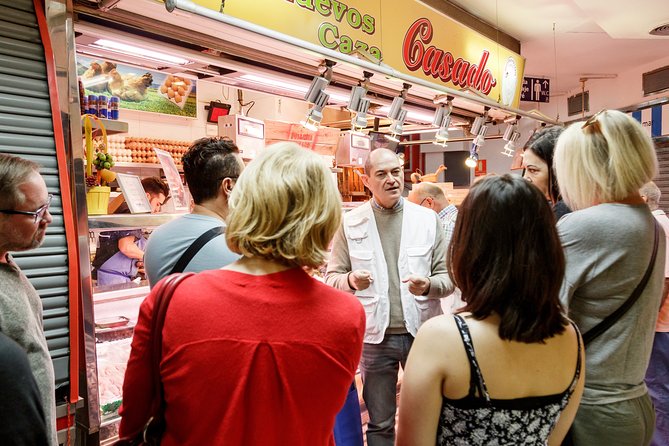
The morning session is the stronger choice if you want food shopping to be part of the experience. You begin with a visit to a local market, where the chef explains Spanish produce, seafood, meats, and typical local eating habits.
This is not just a shopping errand. It gives you a quick look at how ingredients are selected and used in Spain. You can ask why one tomato is chosen over another, how seafood is bought, or what foods appear often in a Spanish home. The market visit also helps you get your bearings in the neighborhood if you are staying nearby.
The chef guides the buying, but you are part of the process. That makes the later meal feel less like a staged class and more like a shared cooking project. You see the ingredients before they are chopped, seasoned, or placed in the pan.
Back at Cooking Point, you prepare a menu built around paella. Gazpacho is listed as the starter, with salad and sangria also included in the class experience. The exact ingredients can change based on dietary requirements and the day’s menu, so you should not treat the sample menu as a guaranteed fixed recipe.
Paella is a useful dish to learn because it depends on timing and technique more than complicated equipment. The chef explains the steps and the different types of paella, while you help prepare the dish. The class is designed for beginners, but experienced home cooks should still find enough technique and cultural context to make it worthwhile.
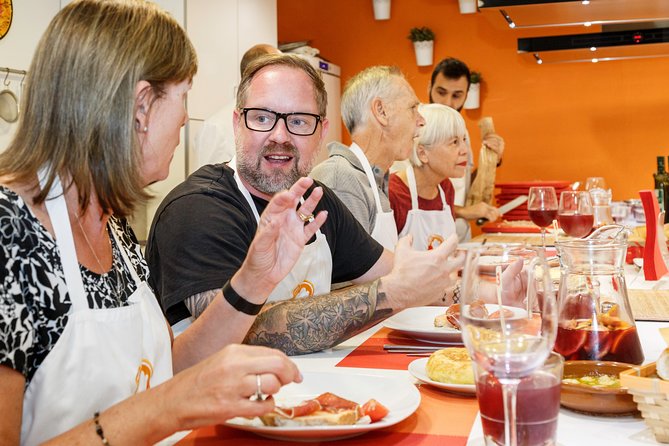
The meal comes at the end, when the group sits down to eat what it has prepared. This is where the social side works best. You share food and travel stories with the other participants, and the long cooking period gives the group time to get acquainted.
The evening route: a generous tapas menu
The evening class follows a different plan. Instead of focusing on paella, you prepare a selection of Spanish tapas. This is the better pick if you want variety, several small dishes, and a dinner that feels like a tour through familiar Spanish bar food.
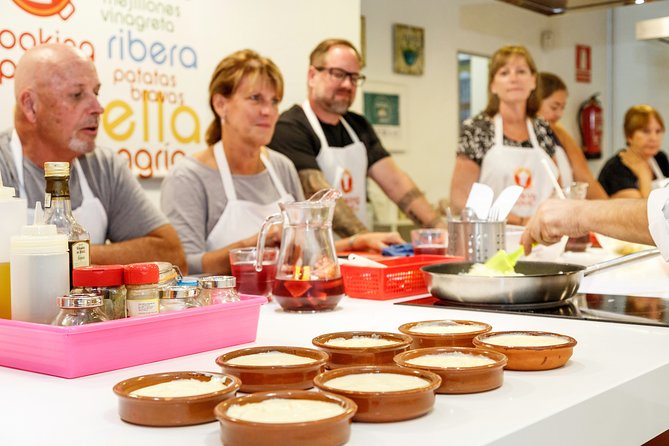
The sample menu includes Spanish potato omelet, garlic shrimp, chorizo in cider, patatas bravas, tomato bread with ham, crema Catalana, and sangria. That is a lot of food for one class, and the meal is more substantial than the word tapas might suggest.
Each dish teaches a different basic skill. The potato omelet introduces a Spanish staple with a simple ingredient list but careful cooking. Garlic shrimp brings fast stovetop work. Chorizo in cider adds a regional flavor combination, while patatas bravas shows how a crisp potato dish becomes a bar favorite with sauce.
Tomato bread with ham is less demanding, but it helps explain the Spanish preference for strong ingredients treated simply. Crema Catalana gives the class a sweet finish and adds a custard technique to the lesson. Sangria ties the evening together and gives you a drink to enjoy while the food cooks.
The evening session can be a good match for families, couples, and small groups of friends. A six-year-old has taken part successfully, although young children will need the usual close supervision around knives, heat, and hot pans. The supplied information does not set a minimum age for cooking, so ask Cooking Point if you are booking with very young children.
The big planning point is worth repeating: the tapas menu and the paella menu are separate. If paella is the dish you most want to learn, book the morning class and check the exact session before paying.
Why the market visit adds real value
Many food classes include a tasting or a demonstration. This one makes the ingredient-buying stage part of the lesson, at least in the morning. I consider that one of the most useful features because it connects the finished dish with everyday Spanish food shopping.
The chef also explains where produce, seafood, and meat come from and how locals use them. That gives you context you will not get from a recipe alone. Afterward, you are better prepared to recognize ingredients in Madrid markets and restaurants.
The market walk is also a nice fit for anyone staying in the neighborhood. It is not a long sightseeing tour, and it is not meant to replace a full market visit. Instead, it offers a short, focused look at food culture before you start cooking.
If you book the evening class, you do not have this market component listed as part of the schedule. You still get the cooking, the meal, and the chef’s explanations, but the morning session offers the fuller food experience.
More Spanish Cooking Classes in Madrid
- Taste of Spain: Tapas Cooking Class with Bottomless Wine Pairing
★ 5.0 · 414 reviews - Madrid: 10 Tapas 2.5-Hour Cooking Class
★ 4.7 · 222 reviews - 10 Tapas Cooking Class Experience in Madrid with Sangria
★ 5.0 · 137 reviews - Madrid: Tapas & Paella Cooking Class with Expert Chef
★ 4.9 · 61 reviews
Dietary needs, drinks, and the pace of the class
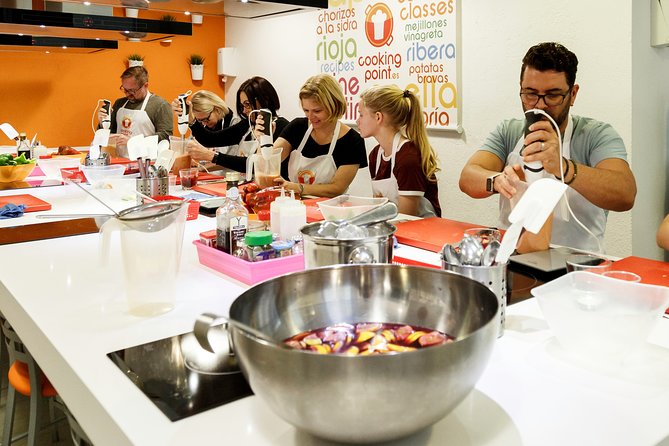
Cooking Point says it can accommodate dietary requirements, but you need to provide those details when booking. Do not wait until you arrive. The menu may need to be adjusted, and the kitchen needs advance notice to prepare properly.
The class includes drinks, with sangria appearing in both the paella and tapas menus. The minimum drinking age is 18. If you do not drink alcohol, state that when booking so the staff can advise you about suitable alternatives, though the supplied information does not specify which nonalcoholic drinks are available.
Four hours is a sensible length for this activity. You have time to shop in the morning session, prepare several dishes, sit down for a meal, and talk with the group without rushing every step. The drawback is that it takes a large block out of your day. If you have only a short visit in Madrid, make sure the class fits around your sightseeing plans.
Come hungry. The menu is built as a full meal, and the portions may be generous enough to leave you with extra food. That is a good value point, but it also means this is not a quick snack stop between museums.
The value of the $102.79 price
At $102.79 per person, this is not the cheapest way to eat paella or tapas in Madrid. You can find a lower-cost meal in the city. The price makes more sense when you count the four-hour class, the chef’s instruction, the ingredients, the drinks, and the recipe booklet.
The morning class offers the strongest value because it includes the market visit as well as the cooking session. You are paying for food, but also for an introduction to ingredient shopping and Spanish cooking habits. The evening class still offers a large menu and a full social meal, though it lacks the market walk.
For me, the key question is how much you value participation. If you only want to taste paella, spend your money at a restaurant. If you want to learn how to prepare Spanish dishes and recreate them at home, the price is easier to justify.
The recipe brochure adds practical value. It lets you try the dishes again after your trip, including the techniques for gazpacho, paella, tapas, sangria, and dessert where included in your chosen session.
Who will enjoy this most
I would point this class toward several types of visitors:
- First-time visitors to Madrid who want food culture explained in plain language.
- Couples and families looking for an activity that is social and not built around simply sitting at a table.
- Solo visitors who like meeting people and are comfortable being paired with another participant.
- Home cooks who want recipes and techniques they can use after returning home.
- Food-focused visitors who care about ingredients, market shopping, and local eating habits.
- Small groups celebrating a birthday or special occasion, provided everyone is happy to share the kitchen.
It may be less suitable if you dislike group activities, want a private chef lesson, or have a very tight schedule. The group size is limited to 12, but it is still a shared class, not a private cooking appointment.
Practical details for a smooth visit
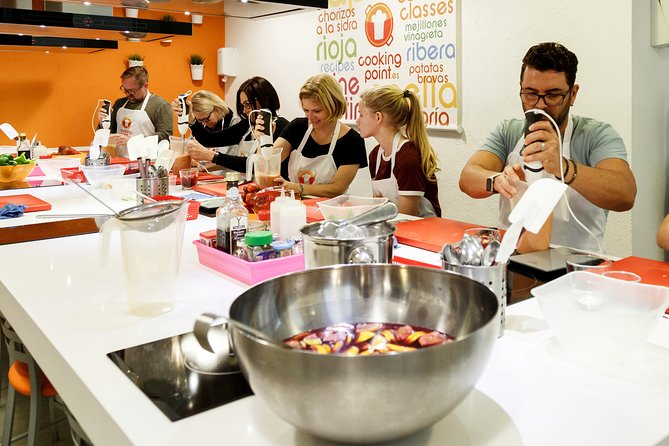
The meeting point is Cooking Point, Calle de Moratín 11, in Madrid’s Centro area. The activity ends at the same location. Public transportation is nearby, but hotel pickup and drop-off are not included.
This experience is often reserved well ahead, with average bookings made about 37 days before the date. I would not leave it until the last minute if you have a fixed morning or evening in mind, especially if you are traveling with a family or group.
Confirmation is normally issued at booking. If you book within one day of the class, confirmation arrives as soon as possible and depends on availability. Free cancellation is available up to 24 hours before the start time. After that point, cancellations and changes are not accepted for a refund.
The experience is offered in English and uses a mobile ticket. Bring an appetite, arrive at the stated meeting point, and tell the operator about food restrictions before the class begins.
Should you book this Madrid cooking class?
Book it if you want to cook rather than watch, meet a small group, and learn food traditions through actual dishes. Choose the morning session for the market visit and paella. Choose the evening session for a wide tapas menu, dessert, and a relaxed dinner with sangria.
I would especially recommend it for families, first-time Madrid visitors, and anyone who has tried cooking classes in other cities and wants a more active format. I would skip it only if you want a private lesson, dislike shared meals, or are mainly looking for a cheap restaurant dinner.
FAQ
Where does the cooking class begin?
The class begins at Cooking Point, Calle de Moratín 11, Centro, 28014 Madrid, Spain.
Where does the activity end?
The activity ends back at the Cooking Point meeting location.
How long does the experience last?
The class lasts approximately four hours.
Is the class offered in English?
Yes. The experience is offered in English with a local English-speaking chef.
How many people can join the class?
The class has a maximum of 12 participants.
What is included in the price?
The price includes the tapas and paella cooking class with drinks, a local guide, and a recipe booklet.
Does the morning class include a market visit?
Yes. The morning class includes a visit to a local market to shop for fresh ingredients.
Can dietary requirements be accommodated?
Yes. Dietary needs can be accommodated, but you must provide the details when booking.
What is the cancellation policy?
You can cancel at least 24 hours before the start time for a full refund. Cancellations or changes made less than 24 hours before the experience are not accepted for a refund.
More Sangria and Tapas Tours in Madrid
- Madrid: Paella and Sangria Workshop with Tapas
★ 4.9 · 128 reviews - Authentic Paella in Madrid: A Hands-On Class with Tapas & Sangria
★ 4.0 · 7 reviews - Barcelona Paella Cooking Class with Market Visit, Tapas & Sangria
★ 5.0 · 2,531 reviews - Barcelona Food Tour: Tapas, Paella, Sangria & 8+ Local Tastings
★ 5.0 · 1,275 reviews
Just added to the tapas trail around Madrid
- Madrid: Private Tapas & Wine Food Walking Tour in La Latina★ 5.0 · 4 reviews
- Madrid Food Tour – Tapas Walking Tour★ 5.0 · 3 reviews
- Culinary tour “Tapas & Wines” in Madrid★ 5.0 · 3 reviews
- Private Wine & Gourmet Tapas Tour in Madrid with Sommelier★ 5.0 · 49 reviews
- Try Madrid Best Churros, Tapas & Market by FLT★ 5.0 · 37 reviews
- Tasting Madrid: Tapas Private Guided Tour (Customizable)★ 5.0 · 7 reviews
- Flamenco show & tasting Tapas with panoramic views in Madrid★ 4.5 · 6 reviews
- Small Group Tapas Tour in Madrid★ 5.0 · 4 reviews
Sangria and Tapas Tours, plate against plate.
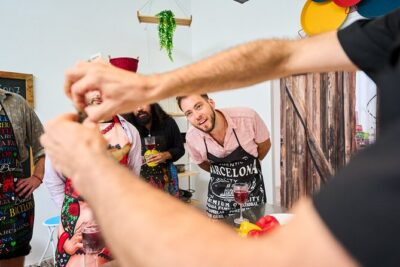
Barcelona Paella Cooking Class with Market Visit, Tapas & Sangria
Read our review →
Barcelona Food Tour: Tapas, Paella, Sangria & 8+ Local Tastings
Read our review →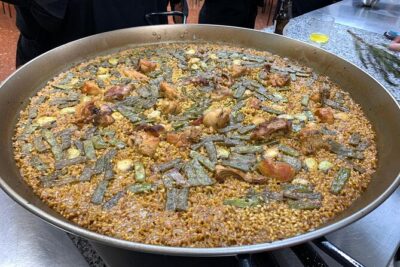
Valencian Paella Cooking Class, Tapas & Sangria – Evening
Read our review →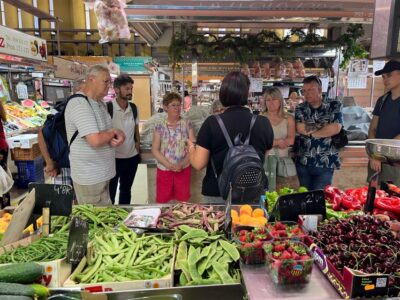
Real Paella Cooking Class – Market Visit & Sangría Workshop
Read our review →
Madrid: Paella & Sangria Classes- Seafood, Chicken & Vegan option
Read our review →
Alicante: Paella & Sangria Class with Tapas and Market Visit
Read our review →
Barcelona: Seafood Paella ★Maestro★ & Tapas & Sangria
Read our review →