Review · ALICANTE
Paella & Sangria Class with Tapas and Market Visit
A market visit that ends with you cooking lunch in a real restaurant kitchen is the best part of this Alicante experience. You start at Mercado Central, choose local ingredients with your guide, then prepare paella, sangria, tapas, and salad from scratch.
I like the hands-on cooking and the chance to choose seafood, meat, or vegetarian paella. I also like the food lesson woven through the market visit, especially the explanations of Iberian ham, olives, shrimp, cuttlefish, and Alicante’s paella traditions.
The main caution is that paella here follows local practice, with the rice and stock doing most of the work. If you expect a huge pile of seafood or a strong wine-based drink, you may find the portions and traditional sangria style less familiar.
Key points
- Start at Alicante’s Mercado Central: Select produce, seafood, meat, wine, and other ingredients with a local guide.
- Cook in a working restaurant kitchen: This is a functioning local food setting, not a staged demonstration room.
- Choose your paella style: Pick seafood, meat, or vegetarian when booking or at the class, depending on the available arrangement.
- Learn the real flavor base: You prepare broth and salmorreta, the sofrito-style base that gives the rice its character.
- Enjoy more than paella: The meal includes tapas, sangria, salad, olives, cured meats, and other accompaniments.
- Expect a social class: The advertised maximum is 16 people, though some sessions may be much smaller.
From Mercado Central to the Paella Pan
The class begins at Plaza 25 de Mayo, outside Mercado Central in central Alicante. This is a practical meeting point near public transportation, and the activity ends back there after roughly three and a half hours.
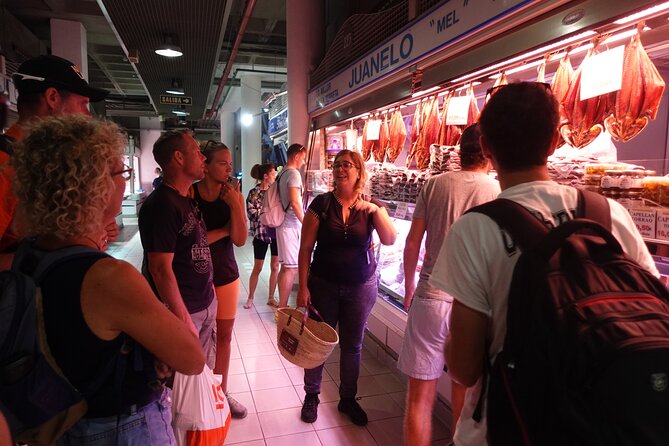
The first hour is spent inside the market. Your guide leads you through the stalls and explains what you are buying instead of simply handing you ingredients. You may learn how local shrimp differ from larger ocean varieties, how olives are brined, and why certain cuts of fish, squid, or meat suit paella.
That market stop gives the class its sense of place. You are not only learning a recipe. You are seeing the foods Alicante cooks with every day and understanding how a dish begins before anyone turns on the stove.
Mercado Central is also worth seeing on its own. It is a large indoor market with produce, seafood, meat, ham, sausage, olives, and other local goods. The visit is not a hurried photo stop. You have time to browse, ask questions, and help select the supplies for the meal.
Guide Federico, also called Fred or Freddy in some sessions, has been praised for his easy English and friendly way of involving the whole group. He has also been described as switching between English and Spanish while explaining the food. That matters in a market, where the most useful lessons often come from small details rather than a prepared speech.
More Sangria and Tapas Tours in Alicante:
- Alicante: Paella & Sangria Class with Tapas and Market Visit
★ 4.8 · 243 reviews - Barcelona Paella Cooking Class with Market Visit, Tapas & Sangria
★ 5.0 · 2,531 reviews - Spanish Cooking Class Paella Tapas and Sangria in Madrid
★ 5.0 · 1,340 reviews
What You Learn About Alicante’s Ingredients
The food explanations are one of the strongest reasons to book this class. You may hear about Iberian ham, mountain sausage, salted fish, olives, shrimp, squid, cuttlefish, wine, and the local ingredients used in salmorreta.
The guide also explains regional differences in paella and the traditions behind both paella and sangria. That context helps you understand why an Alicante-style rice dish may not resemble a restaurant paella served elsewhere in Spain.
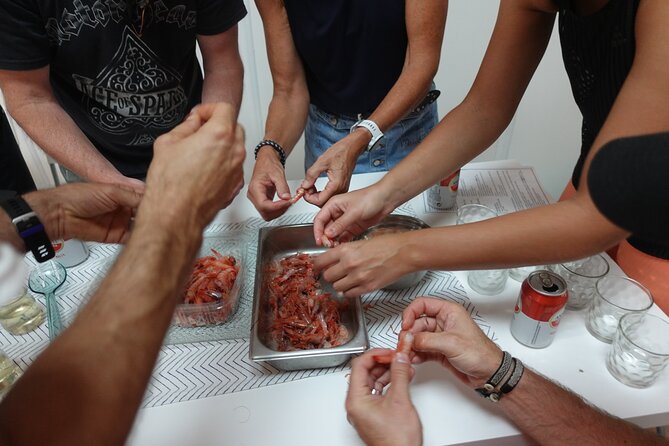
A particularly useful lesson concerns seafood. Mediterranean shrimp from Alicante’s bay can be smaller than ocean shrimp, but size alone is not a measure of quality. Local sepionet, a small cuttlefish, may also appear in place of regular cuttlefish. If you are used to judging a seafood dish by the size or quantity of its pieces, this is a good place to reset your expectations.
You may also see more than one version of the meal prepared. Some sessions have included both fish and meat paella, along with tomato salad, salted fish, olives, cured ham, sausage, crisps, and fresh fruit. Exact dishes can vary with the group and market supply, but the broader meal is not limited to a pan of rice.
Inside the Working Kitchen
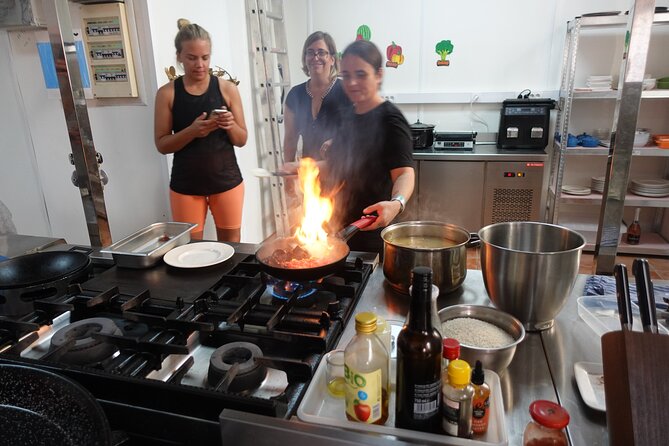
After the market, you walk about three blocks to the restaurant kitchen. The cooking takes place in a local working kitchen rather than a purpose-built tourist classroom. A chef and host guide you through preparation, and the group takes turns with the tasks.
This format is especially good for beginners. You do not need to arrive with cooking experience, since the process is broken into clear jobs. You may prepare ingredients, help make the broth, work on the salmorreta, assist with the rice, and take part in the final cooking.
One memorable detail from the class is the use of a blow torch to cook fish during preparation. It is the sort of small, practical touch that makes the session feel active rather than like a cooking lecture.
The class also gives you a chance to ask why each step matters. The guide explains how the stock builds flavor and why the rice is the heart of the dish. In traditional paella, the seafood, meat, or vegetables are not meant to overwhelm the rice. The broth and sofrito provide the foundation.
That approach may surprise you if you expect paella to be packed with large seafood pieces. One critical experience described small shrimp and limited seafood, while the host defended the use of local ingredients and the importance of the rice. The fair takeaway is simple: this class teaches an Alicante style, not a showy restaurant platter designed mainly for appearance.
Making Paella, Salmorreta, and Sangria
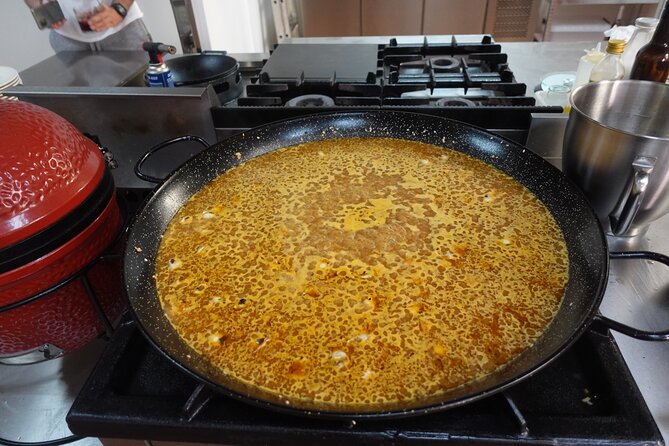
The cooking lesson covers the main stages of paella from the beginning. You prepare the broth, make salmorreta, balance the flavors, and cook the rice in the pan. The guide and chef keep the group moving so everyone has a chance to participate.
Salmorreta is particularly important in Alicante cooking. It is a concentrated base made from ingredients such as tomato, garlic, and peppers, and it gives the rice a savory foundation. Learning this step makes the class more useful than simply watching someone add ingredients to a pan.
The seafood option may include fish, shrimp, squid, or cuttlefish. The meat version uses local meat ingredients, and the vegetarian option provides flexibility for people who do not eat meat or seafood. Ask clearly about your preferred option when booking, since the class may organize ingredients according to the group’s choices.
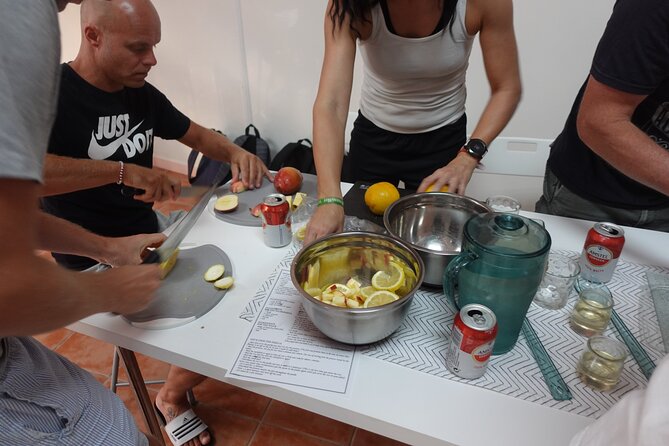
While the paella cooks, you prepare sangria. The class uses wine with orange juice and soda, along with fruit, syrup, and liqueur. That is the traditional sweet, diluted style served in many Spanish settings, but it will not suit anyone looking for a glass of straight wine.
The sangria portion is participatory rather than decorative. You help mix it, learn the basic proportions, and receive recipes to take home. The same is true of the paella, so the value continues after your holiday if you actually use what you learned in your own kitchen.
More Paella Cooking Classes in Alicante:
- Alicante Paella Cooking Class, Tapas, Drinks and Marketplace
★ 5.0 · 349 reviews - Alicante Paella Cooking Class, Tapas, Drinks and Market
★ 4.9 · 301 reviews - Barcelona Food Tour: Tapas, Paella, Sangria & 8+ Local Tastings
★ 5.0 · 1,275 reviews - Valencian paella cooking class, tapas and visit to Ruzafa market.
★ 5.0 · 828 reviews
The Meal: Tapas, Salad, Rice, and Sangria
The finished meal is served in the same relaxed setting. Along with your paella and sangria, expect tapas and side dishes that can include Iberian ham, cured sausage, tomato salad with salted fish, olives, crisps, and fruit.
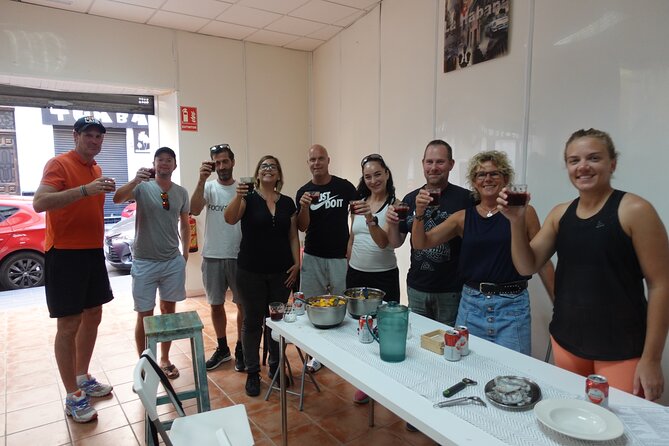
This makes the experience feel closer to a shared Spanish meal than a narrow cooking lesson. You sit with the other participants, taste the food you helped prepare, and compare the results of the group’s work.
The social side is a real part of the appeal. Sessions have included groups of five, seven, eight, and larger parties. A group of seven or eight is likely to feel especially comfortable for market questions and kitchen participation, while the official maximum can reach 16 people.
A larger group does not automatically ruin the class, since the host assigns tasks and keeps the cooking organized. Still, if you want a quiet, highly personal lesson, ask about the group size before booking if that information is available. The class is designed for shared participation, not private instruction.
Is $59.26 a Good Value?
At $59.26 per person, the price is reasonable for a three-and-a-half-hour experience that combines a market tour, instruction, a full meal, drinks, and a guide and chef. You are not paying only for a plate of paella. You are paying for the ingredients, market orientation, kitchen access, teaching, tapas, sangria, and the meal itself.
The value is strongest if you want to understand how Alicante cooks and eats. A standard restaurant meal might give you good paella, but it will not show you how to choose the ingredients, prepare the stock, make salmorreta, or balance a traditional sangria.
The value is weaker if your only goal is a large seafood lunch. This is not advertised as an unlimited feast, and the class places emphasis on the rice, broth, and local ingredient quality. Seafood portions may look modest compared with tourist-style paella served abroad.
The price also includes a social activity that fills much of a half-day. You meet at the market, walk to the kitchen, prepare several dishes, and sit down to eat. For many visitors, that is a better use of time than a quick meal with no explanation of what is on the plate.
Who Will Enjoy This Alicante Cooking Class?
I would recommend this class to first-time visitors who want an easy introduction to Alicante’s food culture. It works well for couples, families with adult children, solo participants, and small groups of friends.
You do not need advanced cooking skills. The work is shared, and the guide explains each stage. The class is also a good choice if you want an activity that combines food with local background rather than a formal restaurant tasting.
It suits curious eaters who are willing to try salted fish, cured meats, local shrimp, cuttlefish, and other ingredients that may be new to them. You can choose a vegetarian paella, but the wider meal may still include meat or seafood accompaniments, so ask about the full menu if that matters to you.
The class is less suitable for someone who dislikes group activities or wants a private chef lesson. It is also not ideal if you expect a short demonstration followed by a large, seafood-heavy meal. The format asks you to participate, wait for the cooking, and eat the local way.
Alcohol is part of the experience through the sangria. The minimum age for alcohol consumption is 18. If you do not drink, confirm how the class can accommodate you before booking.
Practical Details Before You Book
The experience is offered in English and uses a mobile ticket. Confirmation is provided at booking, and the meeting point is Plaza 25 de Mayo, 03004 Alicante.
Plan on about three and a half hours from meeting to finish. The activity returns to the original meeting point, so it is easy to fit into a day of sightseeing in central Alicante.
The advertised group limit is up to 16 people. The smaller sessions described in the available information had five to eight participants, which is a comfortable size for cooking and conversation. Since the group can be larger, do not assume a private or semi-private class.
You can cancel for a full refund if you do so at least 24 hours before the start time. Changes or cancellations inside that window are not accepted, and the activity may be rescheduled or refunded if the minimum number of participants is not reached.
Should You Book It?
Book this class if you want more than a meal and like the idea of learning by doing. The market visit, local ingredient lessons, preparation of salmorreta and broth, hands-on cooking, and shared tapas make it a well-rounded introduction to Alicante food.
Go in with the right expectations. The paella is about seasoned rice and stock, not mountains of seafood, and the sangria is a sweet mixture of wine, juice, soda, fruit, and other additions. If that sounds like the Spanish food experience you want, the $59.26 price offers good value. If you mainly want a generous seafood feast, choose a restaurant instead.
FAQ
Where does the paella and sangria class meet?
The class begins at Plaza 25 de Mayo, outside Alicante’s Mercado Central, at Pl. 25 de Mayo, 03004 Alicante, Spain.
Where does the activity finish?
The activity ends back at the original meeting point near the market.
How long does the experience last?
The class lasts approximately three hours and 30 minutes.
Is the class offered in English?
Yes. The experience is offered in English.
What kinds of paella can I choose?
You can choose seafood, meat, or vegetarian paella.
How many people can join the class?
The activity has a maximum of 16 participants. Smaller sessions may have fewer people.
Can I cancel for a full refund?
Yes. You can cancel at least 24 hours before the start time for a full refund. Cancellations made less than 24 hours before the start time are not refunded.
More Market and Tapas Tours in Alicante
- Alicante Tour: Full City, Castle, Market & Tapas Experience
★ 5.0 · 20 reviews - Alicante: Central Market Guided Food Tour with Tapas Bars
★ 5.0 · 5 reviews - All of Alicante with the Castle, Market, and Tapas. Small group, max 6 people
★ 5.0 · 4 reviews - San Sebastian Pintxo Food, Wine & Market Foodie Tour(Small Group)
★ 5.0 · 621 reviews
Just added to the tapas trail around Alicante
- Winery Visit and Tasting in Elche with wines and tapas from Alicante in Van★ 5.0 · 9 reviews
- Vibrant Flamenco Show and Tapas Menu in Alicante★ 5.0 · 19 reviews
- Wine and Tapas Tasting Tour from Alicante, Private Van★ 5.0 · 4 reviews
- Evening Spanish Tapas Cooking Class with Live Guitar Music★ 4.5 · 20 reviews
- Alicante Tour: Full City, Castle, Market & Tapas Experience★ 5.0 · 20 reviews
- Alicante Evening Tapas tour★ 5.0 · 27 reviews
- Tapas Tour★ 4.5 · 13 reviews
- From Alicante: Winery Tour and Wine Tasting with Tapas★ 4.5 · 22 reviews
Sangria and Tapas Tours, plate against plate.
Barcelona Paella Cooking Class with Market Visit, Tapas & Sangria
Read our review →
Spanish Cooking Class Paella Tapas and Sangria in Madrid
Read our review →
Barcelona Food Tour: Tapas, Paella, Sangria & 8+ Local Tastings
Read our review →
Valencian Paella Cooking Class, Tapas & Sangria – Evening
Read our review →
Real Paella Cooking Class – Market Visit & Sangría Workshop
Read our review →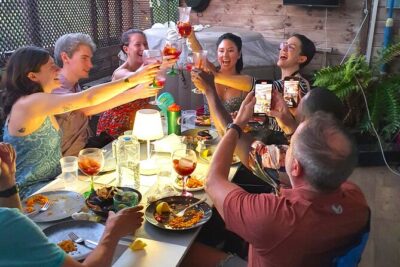
Madrid: Paella & Sangria Classes- Seafood, Chicken & Vegan option
Read our review →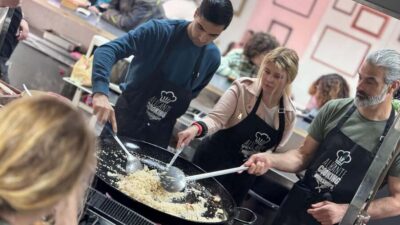
Alicante: Paella & Sangria Class with Tapas and Market Visit
Read our review →