Review · BARCELONA
Barcelona: Seafood Paella ★Maestro★ & Tapas & Sangria
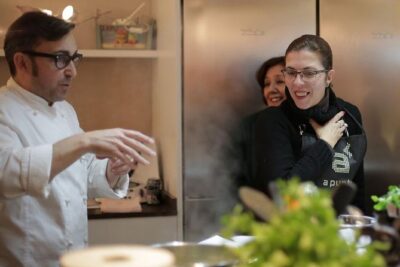
Barcelona’s best food lessons often begin with a pan in the middle of the table. This two-hour paella cooking class takes you into Sarrià, a quieter district away from the busiest sightseeing streets, where you visit the market, prepare seafood paella, make sangria, and sit down to share the meal.
I like the family recipe approach, with the chef explaining not only what to add but why each ingredient matters. I also like the communal setup: you work as a group, just as paella is traditionally made and eaten with family and friends. The main consideration is the seafood. Dietary requests can be accommodated if you ask ahead, but seafood remains part of the cooking experience.
Key points at a glance
- Sarrià market visit: Learn how to choose fresh ingredients before entering the cooking space.
- Seafood paella from scratch: Prepare the classic rice dish as a group, including the important finishing steps.
- Three Spanish staples: Make paella, pan con tomate with ham, sausages and cheese, and fruit-filled sangria.
- Stories behind the food: Guides such as Eladi, Oriol, Jordi, Francesca, and Martin explain local customs and cooking traditions.
- A shared meal: You do not cook an individual serving. Everyone contributes to dishes placed in the center of the table.
- Useful take-home skills: Recipes and practical tips, including how to achieve the prized crisp layer at the bottom of the paella.
Arriving in Sarrià for a quieter Barcelona food experience
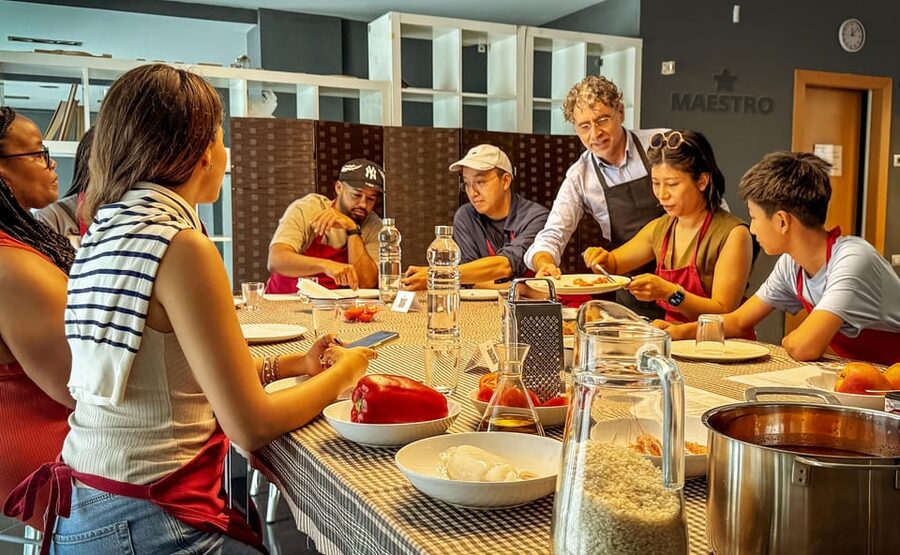
The meeting point is an intimate gastronomic space in the Sarrià neighborhood. That setting changes the mood from the start. You are not being rushed through a central tourist corridor. Instead, you can arrive early and walk through Sarrià’s pretty streets, browse local shops, or stop at one of its gourmet establishments.
Sarrià also offers a different view of Barcelona. The district is known for attractive streets and access to views toward Collserola Park. The class itself lasts two hours, so the neighborhood gives you a useful chance to add a little local wandering before or after the meal.
One practical warning: the meeting point can be hard to spot. One visitor specifically found the location poorly marked. I would save the address carefully, allow a few extra minutes, and avoid cutting the arrival close if you do not know Sarrià.
The cooking space is described as clean, bright, welcoming, and suitable for wheelchair users. The activity is offered in English and Spanish. Since the class is built around conversation and instruction, ask for your preferred language when booking if that matters to you.
More Paella Cooking Classes in Barcelona
- Barcelona Paella Cooking Class with Market Visit, Tapas & Sangria
★ 5.0 · 2,531 reviews - Barcelona Food Tour: Tapas, Paella, Sangria & 8+ Local Tastings
★ 5.0 · 1,275 reviews - Premium Paella Cooking Class & 10 Spanish Tapas
★ 5.0 · 312 reviews
The market visit comes before the cooking
The market visit is an important part of the experience, not just an extra walk. You learn to look for fresh, tasty ingredients and get a better sense of how Spanish cooking begins with shopping.
The available information does not give a fixed list of market stalls or a detailed route, so you should not expect a long market tour with many formal stops. Think of it as a short introduction to selecting products for the dishes you are about to prepare.
This is particularly useful if you plan to cook Spanish food at home. Paella is often treated as a complicated restaurant dish, but ingredient choice and timing matter more than fancy equipment. Seeing the products first helps connect the finished dish with the food culture around it.
The market also gives the class a stronger local feel. You are visiting a neighborhood known for specialty food shops rather than simply entering a generic cooking studio in the center of Barcelona.
Preparing seafood paella with the group
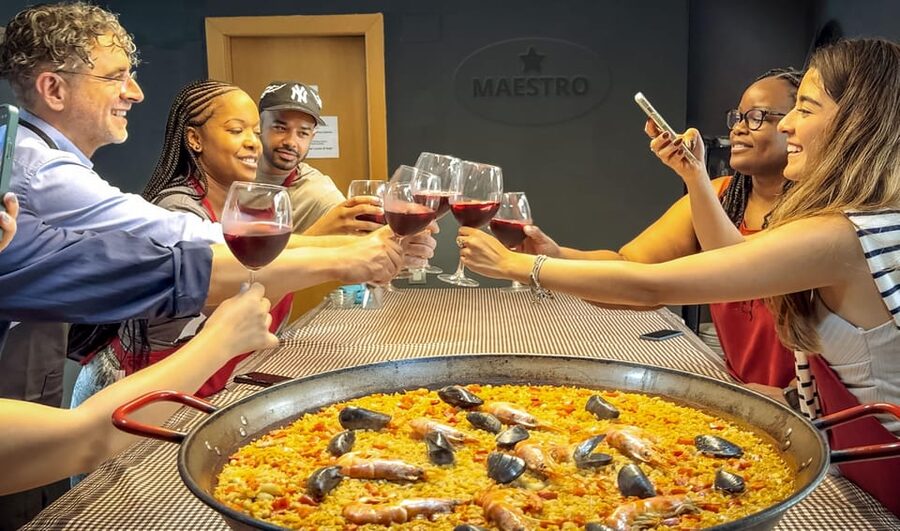
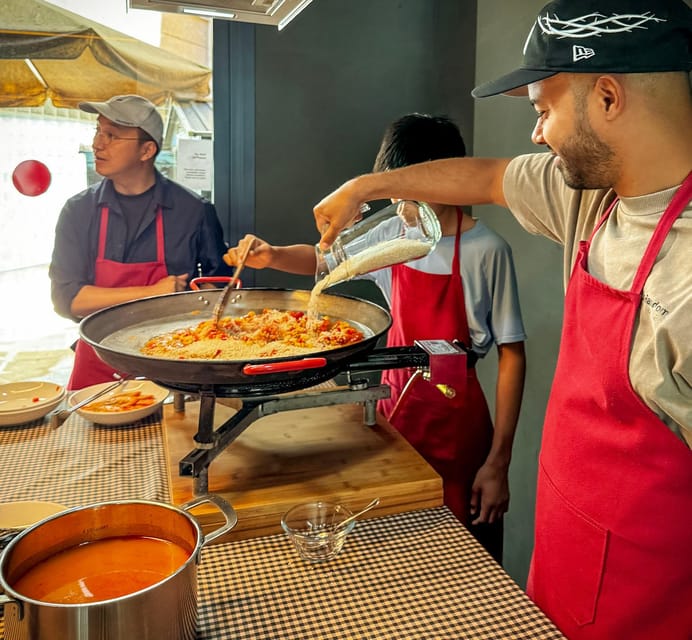
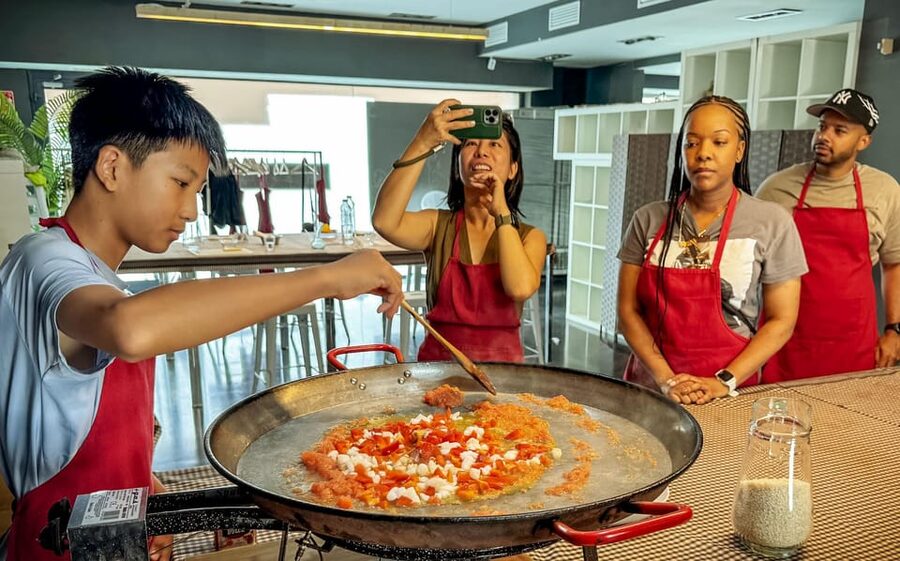
The main event is the seafood Mediterranean paella. The chef leads the class step by step, and the group prepares one shared dish rather than several individual pans.
That format is worth understanding before you book. You will not each make a personal paella from start to finish. Instead, everyone takes part in the preparation, watches the cooking process, and shares the final result.
For many people, this is the better way to learn. You can pay attention to the chef’s timing and technique without worrying about managing a separate pan alone. It also reflects the social role of paella. This is food meant for a table full of people, not a solitary plate.
The instruction covers the ingredients, the cultural meaning of the dish, and the method used to cook it properly. Several guides, including Eladi, Oriol, Jordi, and Martin, have been praised for giving clear directions and making sure everyone could follow along.
One detail worth remembering is the crisp bottom layer, often called the socarrat. A previous class participant specifically appreciated learning how to get that important base right. The class should give you practical guidance on this finishing stage, which is one of the trickier parts of paella for home cooks.
The seafood focus is both a strength and a limit. It gives the dish a classic Mediterranean character, but people with seafood allergies need to contact the provider in advance. The kitchen can adapt to dietary needs when requested ahead of time, though seafood is part of the planned meal.
Pan con tomate and the tapas spread
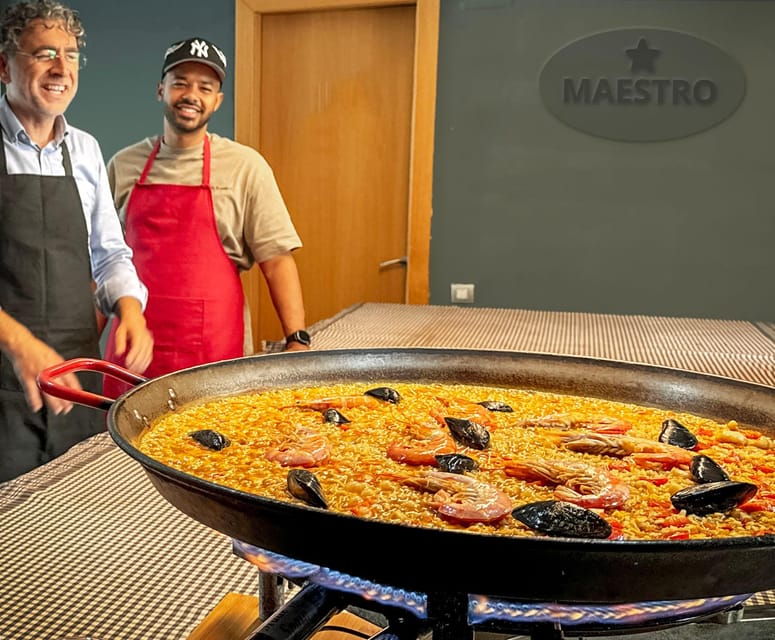
Paella receives most of the attention, but the meal includes other Spanish favorites. You prepare pan con tomate, a simple local starter made with bread and tomato, and it comes with ham, sausages, and cheese.
This is a good reminder that Spanish cooking is not always about long recipes. Pan con tomate depends on good bread, ripe tomato, seasoning, and the right balance of texture. It is easy to recreate at home, which makes it one of the most useful parts of the menu for a returning cook.
The tapas selection adds small bites to the table while the main dish comes together. The exact seasonal selection is not fixed in the information provided, so the tapas may vary. You should expect a selection of local foods rather than one guaranteed list of plates.
I like this part of the meal because it keeps the class from becoming a single-dish lesson. You get to taste several familiar Spanish flavors and learn how a shared meal develops, from simple starters to the main rice dish.
The food is served communally, so this works best if you enjoy talking and cooperating with people you have just met. It is less suited to someone who wants a quiet, private lesson with a personal workstation.
More Sangria and Tapas Tours in Barcelona:
- Barcelona: Paella & Tapas Cooking Class with Sangria
★ 4.9 · 122 reviews - Barcelona: Rooftop Tapas & Sangria class with a Local Chef
★ 5.0 · 61 reviews - Barcelona: Rooftop Tapas and Sangria Class with a Chef
★ 5.0 · 60 reviews - Sangria Cultural Workshop with Tapas
★ 5.0 · 59 reviews
Making sangria with fresh fruit
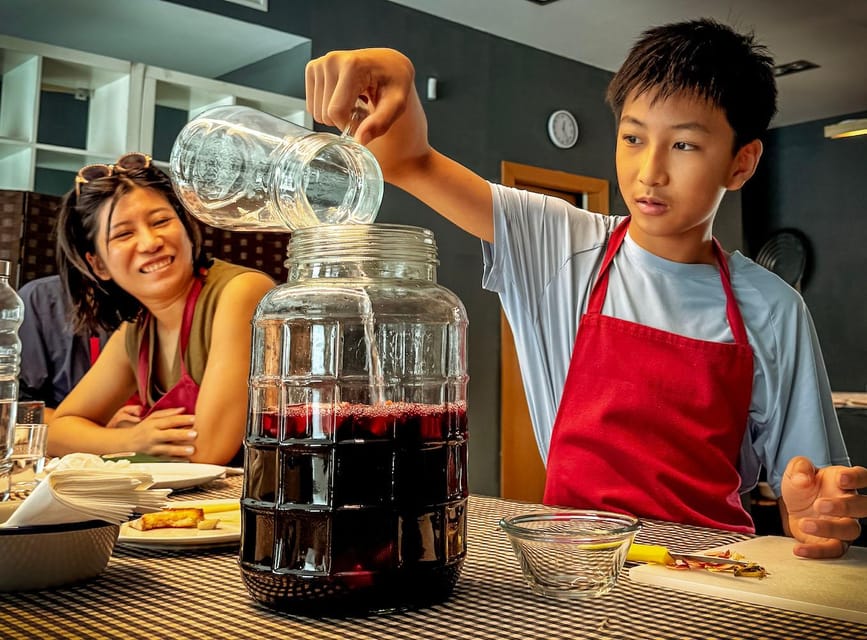
The sangria workshop is a short but useful companion to the food lesson. You prepare a refreshing wine punch with fresh fruit and learn the recipe rather than simply receiving a glass at the table.
The class explains how the drink fits into Spanish food culture, and several participants particularly valued learning the sangria method in detail. That makes sense: sangria looks simple, but the balance of fruit, wine, sweetness, and resting time affects the result.
You should expect sangria as part of the communal meal, not a separate cocktail-making course. The focus remains on cooking, food stories, and enjoying the dishes together.
The drink also helps set a relaxed pace. You can chat with the group while the paella cooks, compare notes with the chef, and enjoy the meal you helped prepare.
The chefs bring the food to life
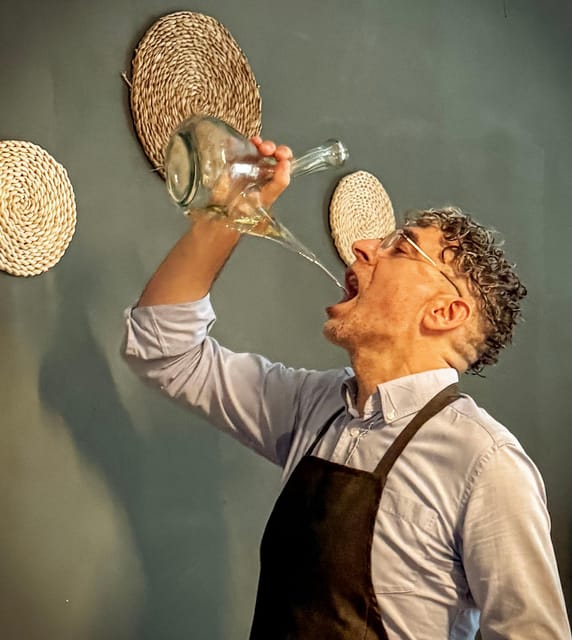
The quality of the class depends heavily on the instructor, and the available guide names include Eladi, Oriol, Jordi, Francesca, and Martin. Their teaching styles may differ depending on who leads your session, but the experience is built around a chef demonstrating the process and involving the whole group.
Eladi is especially associated with explanations of paella’s meaning and its role in bringing people together. Oriol has been praised for kind, clear guidance and background on tapas and paella. Jordi’s sessions have included personal stories, cultural facts, and hands-on instruction.
Francesca has led intimate classes with families and helped make the kitchen feel welcoming. Martin has been noted for checking that everyone understood the lesson. These details matter because cooking classes can fail when one person takes over the stove while everyone else watches. Here, the stated aim is active group participation.
The instruction is available in English and Spanish. It is not presented as a formal culinary school course, so you should expect practical teaching, stories, and conversation rather than technical restaurant training.
A social meal, not a private cooking lesson
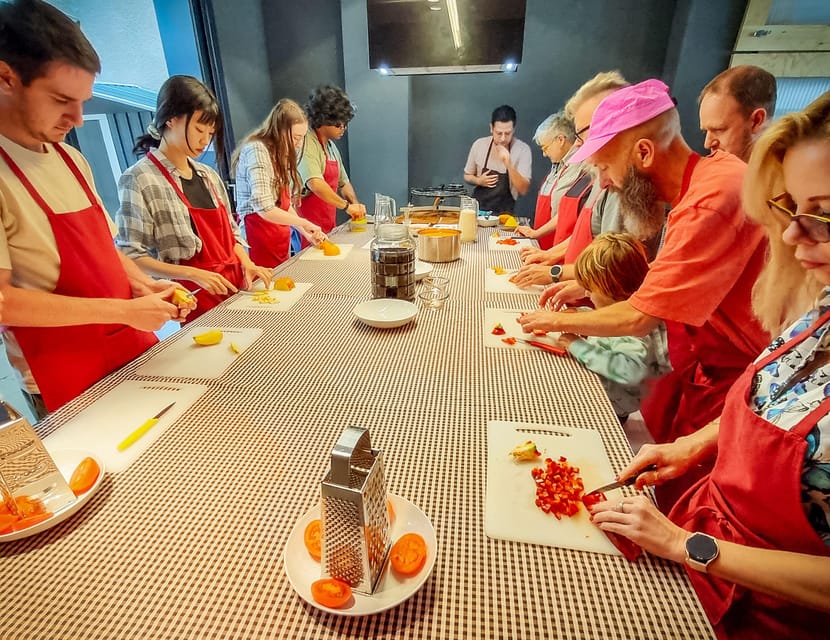
The shared format is one of the strongest reasons to book this activity. You cook with friends, family, or on your own, then eat together at the same table.
Solo visitors can fit in well because the class naturally creates conversation. Families also have a good reason to consider it. Children are welcome, and children aged eight and eleven have taken part in preparing the ingredients and cooking alongside the chef.
For families, the class offers more than a meal. Children can handle simple tasks, learn where food comes from, and see how a dish comes together. Parents should still expect an active kitchen environment and should decide if a two-hour shared cooking session suits their children.
Couples and small groups can use the class as a relaxed evening activity. It is also a good choice for people who want to meet others without signing up for a large group excursion around the city.
The tradeoff is that you give up control over the pace and menu. If you prefer to cook alone, avoid conversation, or receive a private lesson, this communal arrangement may feel too social.
Is $71 a fair price?
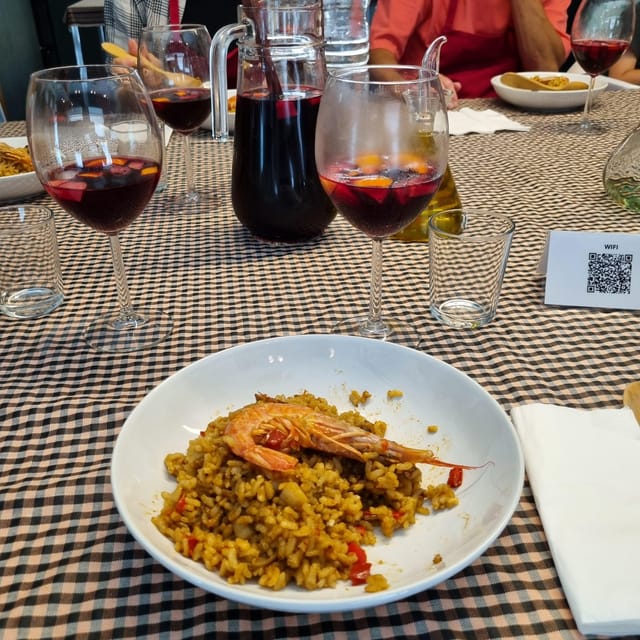
At $71 per person, the price is reasonable if you value instruction, a market visit, a full shared meal, and drinks in one activity. You are not paying only for a plate of paella. The cost includes the chef-led class, ingredients, utensils, tapas, seafood paella, sangria preparation, and recipes to use at home.
The market visit adds value because it connects the dish to shopping and local food choices. The recipes add another benefit after the trip. A restaurant can give you a delicious paella, but it cannot teach you how to repeat the process in your own kitchen.
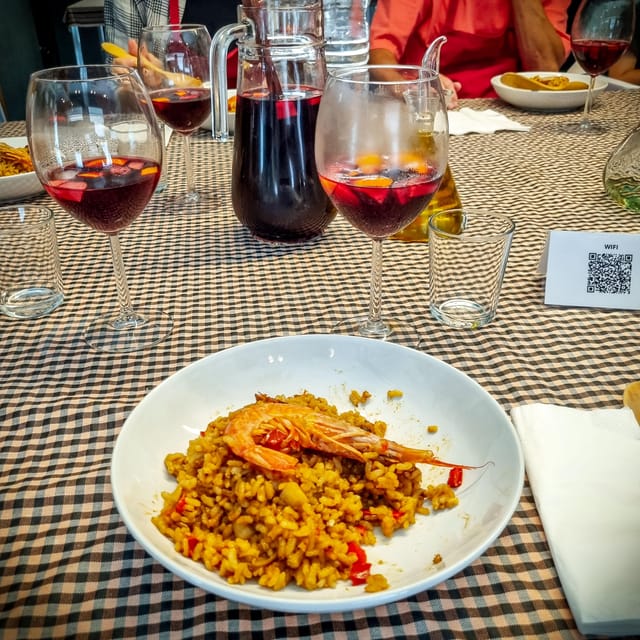
The class also includes enough food to function as a meal, with tapas, pan con tomate, ham, sausages, cheese, paella, and sangria. Coffee and dessert are not included, so budget for those separately if you want to finish the evening that way.
You should compare this price with the value of your time in Barcelona. A two-hour activity in Sarrià works well if you want a meal and a cultural lesson without spending half a day away from the city’s main sights.
Who should book this class?
I would choose this experience for several types of visitors:
- Food-focused visitors who want practical Spanish recipes instead of a standard restaurant meal.
- Families with children who want an activity where everyone can take part.
- Solo visitors who enjoy meeting people around a shared table.
- Couples and friends looking for a social evening with food and drinks.
- Home cooks who want to improve their paella and sangria skills.
- Repeat Barcelona visitors who have already seen the major sights and want time in a different district.
I would think twice if you have a serious seafood allergy, unless the provider confirms an appropriate adaptation in advance. I would also reconsider if you want a private lesson, a fixed tasting menu, or a long guided market tour with a detailed schedule.
Booking is flexible: you can cancel up to 24 hours ahead for a full refund, and the reserve-now, pay-later option lets you hold a place without paying immediately. Wheelchair access is available, but it is still sensible to confirm any specific access needs before arrival.
Final verdict: a strong choice for food and company
Book this class if you want to understand paella as a social dish, not just eat it from a restaurant menu. The strongest features are the hands-on group cooking, the local setting in Sarrià, the clear focus on paella technique, and the useful recipes you can take home.
The experience is not built around luxury, a private kitchen, or a long formal market tour. It is a friendly, practical lesson with a meal at the end. For most people, especially families, solo visitors, and food lovers, $71 buys a memorable slice of Catalan food culture and a skill you can use after Barcelona.
FAQ
Where does the paella class take place?
The class takes place in an intimate gastronomic space in Barcelona’s Sarrià neighborhood.
How long does the activity last?
The activity lasts two hours.
What dishes will I prepare?
You will prepare seafood Mediterranean paella, pan con tomate with ham, sausages and cheese, and sangria with fresh fruit. A selection of seasonal tapas is also included.
Is the market visit included?
Yes. The experience includes a visit to the Sarrià market before the cooking session.
Is the seafood paella cooked individually?
No. The class uses a communal format, so the group collaborates on the dishes rather than preparing individual portions.
Is sangria included?
Yes. You will make sangria during the workshop, and the ingredients and utensils are included.
Are recipes provided?
Yes. Recipes are included so you can prepare the dishes at home.
Can children attend?
Yes. Children are welcome, and the activity has been suitable for children taking part in the ingredient preparation and cooking.
Can dietary needs or allergies be accommodated?
Dietary needs can be accommodated when requested in advance. Seafood is part of the planned experience, so contact the provider ahead of time about any allergy.
What languages are available?
The activity is offered in English and Spanish.
Is the space wheelchair accessible?
Yes. The activity is listed as wheelchair accessible.
Is hotel pickup included?
No. Hotel pickup and drop-off are not included.
Are coffee and dessert included?
No. Coffee and dessert are not included.
Can I cancel the booking?
Yes. You can cancel up to 24 hours in advance for a full refund. You can also reserve now and pay later.
Just added to the tapas trail around Barcelona
- Barcelona: Guided Rooftop Wine Tasting – Enjoy 6 Spanish Wines★ 4.5 · 61 reviews
- Barcelona: Bike or eBike Tour, Top Sights & Local Insights★ 5.0 · 47 reviews
- Barcelona Sailing Experience: Spanish Tapas and Premium Open Bar★ 4.5 · 34 reviews
- Wine & Cava Penedes Tour: Wineries, Wine Tasting and Tapas★ 5.0 · 5 reviews
- Barcelona’s Most Terrific of Tapas Tours in the Gothic quarter★ 5.0 · 2 reviews
- Barcelona Morning Tapas Crawl by Food Tour★ 5.0 · 45 reviews
- Tapas Bike Tour Barcelona★ 5.0 · 8 reviews
- Barcelona Tapas & Wine Private Tour in Traditional Taverns★ 4.5 · 60 reviews
Sangria and Tapas Tours, plate against plate.
Barcelona Paella Cooking Class with Market Visit, Tapas & Sangria
Read our review →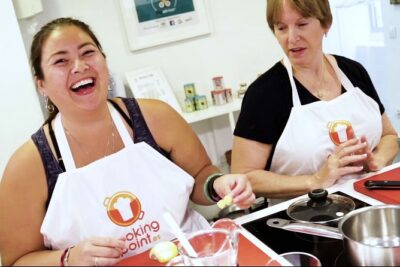
Spanish Cooking Class Paella Tapas and Sangria in Madrid
Read our review →
Barcelona Food Tour: Tapas, Paella, Sangria & 8+ Local Tastings
Read our review →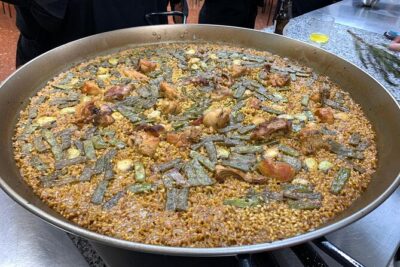
Valencian Paella Cooking Class, Tapas & Sangria – Evening
Read our review →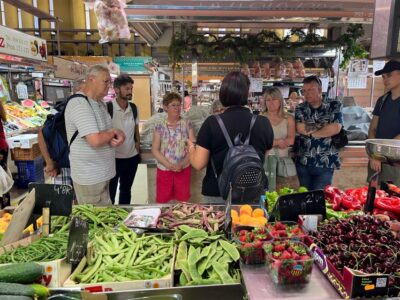
Real Paella Cooking Class – Market Visit & Sangría Workshop
Read our review →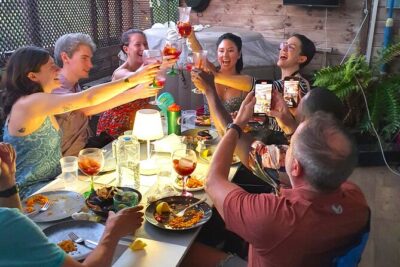
Madrid: Paella & Sangria Classes- Seafood, Chicken & Vegan option
Read our review →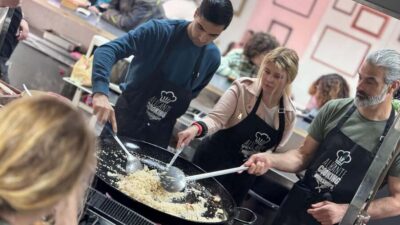
Alicante: Paella & Sangria Class with Tapas and Market Visit
Read our review →