Review · BARCELONA
Cook Paella & Tapas + Market Tour in Barcelona (4-Course Meal)
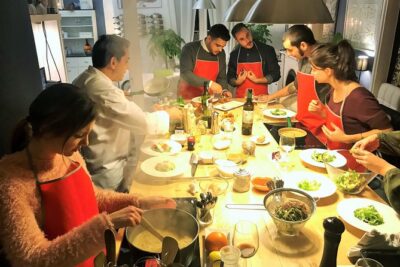
Barcelona’s best cooking classes begin before the stove is lit. This one starts near Plaça Reial with a market visit for ingredients such as peppers, saffron, and fresh seafood, then moves into a kitchen just steps from La Rambla. You’ll finish with a four-course Spanish meal, including paella and crema Catalana, plus wine.
I like the market-to-kitchen format because it gives the food a clear setting, and I like the small maximum of 11 people, which should allow more direct help at the counter. The main consideration is the price: at $186.23 per person, this is a substantial splurge for a three-hour class, even with the meal, wine, and guided shopping included.
Key points to know before booking
- The market visit comes first: You help gather seasonal ingredients before cooking.
- Paella is the main event: Choose seafood or vegetable paella with saffron, rice, and spices.
- The menu covers four Spanish classics: Tapas, paella, tortilla, and crema Catalana.
- Wine is served throughout: The meal is designed as a shared Spanish food experience, not just a lesson.
- The group is capped at 11: That is small enough for a more personal class.
- The meeting point is central: Start at Plaça Reial, 1, near La Rambla, and finish back there.
Starting at Plaça Reial near La Rambla
You meet at Pl. Reial, 1, in Barcelona’s Ciutat Vella. This places you in one of the easiest parts of the city to reach on foot, close to La Rambla and Plaça Reial itself.
That central setting matters. You do not need to spend part of your evening getting out to a distant cooking school. You can pair the class with sightseeing in the old city, though you should plan to arrive at the meeting point on time since the market visit begins the activity.
The class lasts about three hours and ends back at the meeting point. Transportation is not included, so getting to and from Plaça Reial is your responsibility. Since the activity is held in English, it suits you best if you want cooking instruction and conversation in that language.
The group can include a maximum of 11 people. That is not a private lesson, but it is more manageable than a large demonstration class. With a group of this size, you can expect a social meal and some chance to follow the chef’s guidance directly.
More Paella Cooking Classes in Barcelona
- Barcelona Paella Cooking Class with Market Visit, Tapas & Sangria
★ 5.0 · 2,531 reviews - Barcelona Food Tour: Tapas, Paella, Sangria & 8+ Local Tastings
★ 5.0 · 1,275 reviews - Premium Paella Cooking Class & 10 Spanish Tapas
★ 5.0 · 312 reviews
Shopping for peppers, saffron, and seafood
The opening market visit gives the cooking class a useful sense of place. Instead of beginning with ingredients already arranged on a counter, you see the kinds of produce and seafood that shape the meal.
The shopping list includes seasonal items such as peppers, saffron, and fresh seafood. These are not random cooking-class props. Peppers bring sweetness and color to many Spanish dishes, saffron gives paella its familiar aroma and golden tone, and seafood connects the meal to Barcelona’s coastal setting.
I like this part because it helps you understand that paella is built from ingredients, not just a packet of seasoning and a cooking time. You also get a short introduction to the market before settling into the kitchen, which makes the class feel connected to daily food life in the city.
The market visit is described as guided, but the supplied details do not name a particular market or chef. That means you should book this for the general food experience rather than expecting a famous market tour or a specific culinary personality.
The shopping stop is also brief within a three-hour schedule. If you want a long market exploration with time to browse every stall, this is not that. Its purpose is to gather ingredients and prepare you for the meal.
Beginning with tapas and Spanish wine
The first course is a traditional tapas tasting with wine. The stated examples include Iberian sausages, patatas bravas, and other small Spanish dishes.
This is a good way to start because tapas introduce several flavors without asking you to cook a complicated dish immediately. Patatas bravas bring potatoes and sauce to the table, while Iberian sausages offer a savory taste of Spanish cured-meat tradition.
The meal is not simply a sequence of cooking demonstrations. You eat as part of the class, and Spanish wine is served throughout. That makes the activity feel closer to a shared dinner hosted by a local cook than to a formal lesson where you watch someone else do all the work.
There is a small point of uncertainty in the menu description. The main outline calls for a tapas tasting as the first course, while the sample menu lists tortilla as the starter. A described class also included seasonal soup. The exact order or opening dish may therefore depend on the session, the season, or the chef’s plan.
If you have a particular dish in mind, ask about the current menu before booking. The core promise is clear, though: you will take part in a Spanish meal built around tapas, paella, tortilla, and crema Catalana.
Making saffron paella, seafood or vegetable
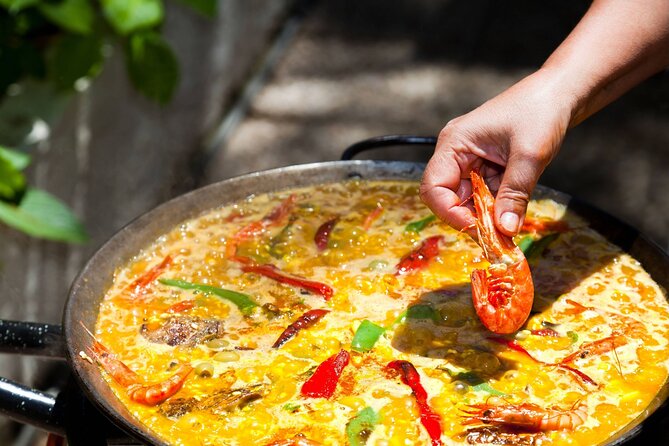
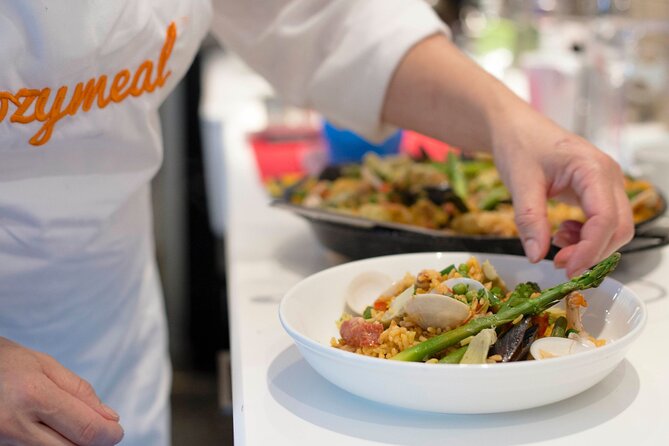
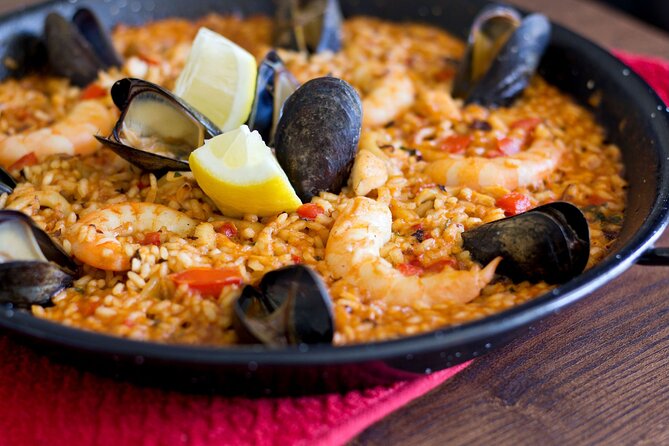
Paella is the centerpiece of the class. You choose between seafood and vegetable versions, then prepare rice with spices and the ingredients gathered during the market visit.
The choice is useful for two reasons. Seafood paella gives you the coastal Spanish profile many people hope to learn in Barcelona, while the vegetable option makes the class more workable for people who do not eat seafood. You should still share dietary needs in advance, since the provider says it can try to adapt the class for a variety of restrictions.
The paella is described as saffron-infused, with regional flavors layered into the rice. You can expect this part to focus on the relationship between the rice, seasoning, and main ingredients rather than on one flashy trick.
A cooking class also gives you a better chance to understand texture. Paella is not just rice with toppings. The cooking process affects how the grains absorb flavor and how the finished dish comes together. The chef’s guidance is especially useful here, since timing and heat matter.
I would consider the seafood choice the most representative option if you eat seafood and want the fullest connection to Barcelona’s coastal food culture. The vegetable paella is the safer choice for a meat-free or seafood-free meal, but you should confirm the exact accommodation when you book.
Same appetite, a different route:
- Montserrat Half-Day Tour with Tapas and Gourmet Wines
★ 5.0 · 7,359 reviews - Montserrat & Cogwheel Train, Gourmet Wine Tasting & Tapas/Lunch
★ 5.0 · 6,290 reviews - Barcelona Tapas and Wine Experience Small-Group Walking Tour
★ 5.0 · 5,804 reviews - Montserrat with Black Madonna & Medieval Winery with Tapas/Lunch
★ 5.0 · 5,209 reviews
Preparing tortilla with potatoes and caramelized onions
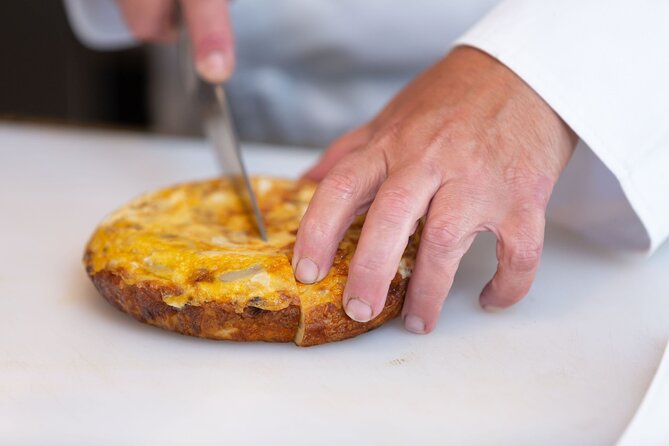
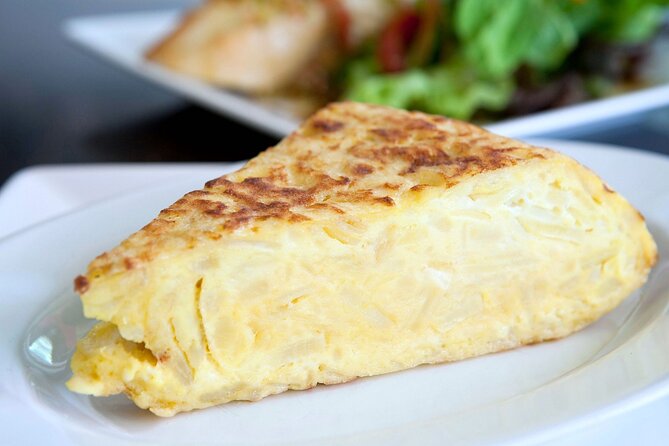
The Spanish omelette adds a familiar but deceptively simple dish to the menu. You prepare it with potatoes, onions, and eggs, with caramelized onions included in the class description.
Tortilla is valuable in a cooking class because its ingredient list is short, leaving little room to hide mistakes. You learn how potatoes, onions, and eggs become a substantial dish through careful preparation rather than a long list of spices.
It also gives the meal a different texture from paella. The rice course is layered and savory, while tortilla is soft, hearty, and easy to recognize as an everyday Spanish staple. This is the kind of recipe you may actually repeat at home because the ingredients are widely available.
The class places tortilla alongside tapas and paella, so you get a useful range of Spanish cooking styles in one sitting. You are not spending three hours on one technically demanding recipe. Instead, you move through several dishes that together explain how Spanish meals are built.
Finishing with crema Catalana and berries
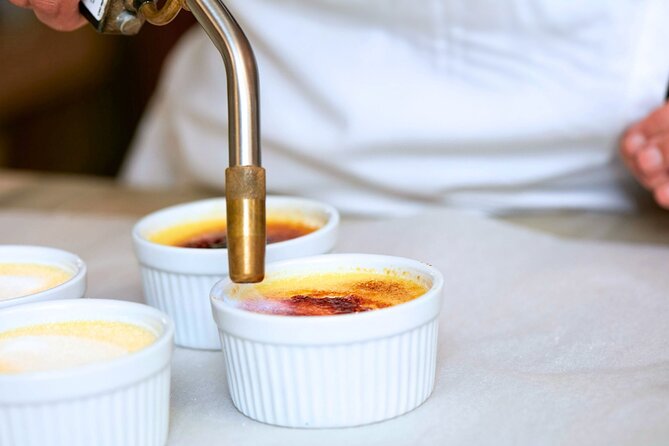
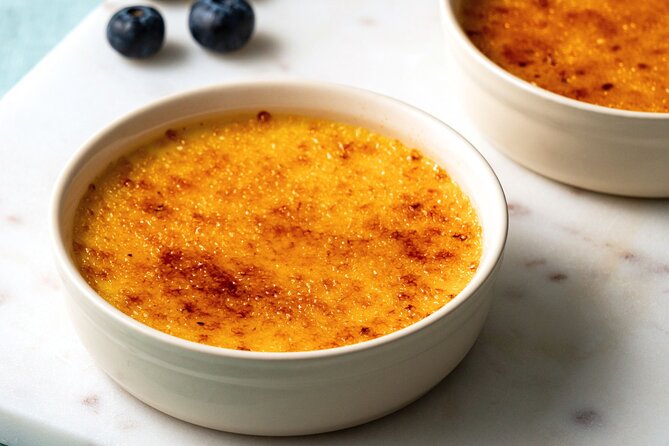
Dessert is crema Catalana topped with seasonal berries. The custard is made with milk, eggs, vanilla, and sugar.
Crema Catalana is a fitting finish in Barcelona because it is a Catalan dessert rather than a generic international pudding. The berries add a seasonal note and a little freshness after the savory food and wine.
This final course also helps round out the class. You are not only learning the famous rice dish. You are preparing a starter or small plates, a main dish, a potato-and-egg staple, and a regional dessert.
The description does not specify whether you prepare every element from start to finish or how much hands-on work each course involves. That is worth keeping in mind if you are looking for an intensive professional cooking lesson. The format is best understood as a guided cooking-and-dining session with several dishes, not a culinary certification course.
What the three-hour format gives you
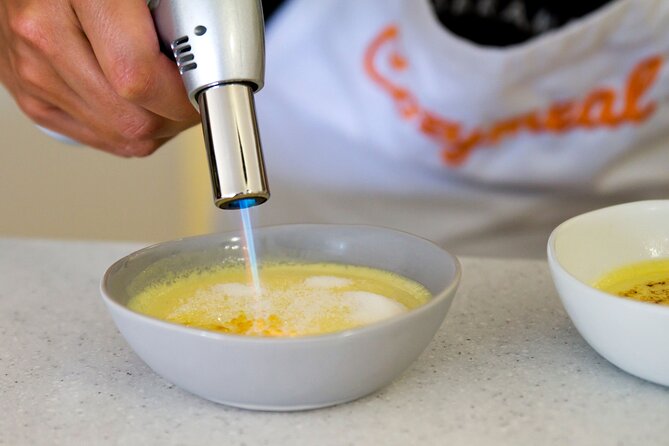
Three hours is enough time to visit the market, cook several dishes, and sit down to eat. It is also short enough to fit into a full Barcelona day.
I see the timing as a strength for most visitors. You get a complete evening activity without giving up an entire day of sightseeing. The location near La Rambla and Plaça Reial also makes it easy to continue exploring the old city afterward, though the activity itself ends back at the starting point.
The trade-off is pace. Four courses, a market visit, and wine service leave limited time for long explanations or leisurely shopping. You should expect a planned sequence rather than a slow, open-ended workshop.
Because the class is capped at 11 people, the schedule may feel more personal than a large cooking demonstration. The chef can guide a smaller group through the dishes, and you have a better chance to ask questions as you work.
How much value do you get for $186.23?
At $186.23 per person, this class is expensive compared with simply ordering paella at a Barcelona restaurant. You are paying for more than the food, though: the market visit, instruction, kitchen setting, four-course meal, and Spanish wine are all included.
The price makes the most sense if you value participation. If your main goal is to eat good paella cheaply, a restaurant will give you better value. If you want to learn how several Spanish dishes come together, meet other people over a meal, and take home ideas for cooking, the class offers more than dinner alone.
The wine also changes the calculation. You are not paying for a dry lesson followed by an extra restaurant bill. The class includes wine throughout, which supports the social, meal-centered format.
Tips for the chef are not included. You should budget for that separately if you want to tip at the end. Transportation is also not included, though the central meeting point keeps that cost and planning fairly simple.
Dietary needs, group size, and practical limits
The provider says the class can accommodate a variety of dietary needs if you provide notice in advance. This is useful, but it is not a guarantee that every substitution will be possible. Contact the provider before booking with clear details about allergies, vegetarian needs, or seafood restrictions.
A vegetable paella option is already listed, which helps if you do not eat seafood. The class also includes eggs, milk, and other common ingredients, so you should ask about the full menu if you have an allergy.
Service animals are allowed. The activity is offered in English, and confirmation is provided at booking. These points make the class straightforward for visitors planning a Barcelona itinerary, but the information does not describe the kitchen’s physical accessibility, so ask directly if that matters for you.
You can cancel for a full refund up to 24 hours before the start time. Cancellations or changes made less than 24 hours ahead are not refunded or accepted, and the cut-off follows Barcelona local time.
Who will enjoy this Barcelona cooking class?
I would recommend this class to you if food is one of the main reasons you came to Barcelona and you want more than a restaurant meal. It suits couples, friends, and solo visitors who enjoy a social setting and are happy to share a kitchen and table with a small group.
It is also a good fit if you want a compact activity near the old city. The market visit adds local context, while the four-course menu gives you a broad taste of Spanish and Catalan cooking in one evening.
Families and mixed-experience groups may also find the format appealing, provided everyone is comfortable with the three-hour schedule and the listed ingredients. You do not need to focus on one advanced technique to enjoy it.
I would hesitate if you want a private class, a long market tour, or a low-cost meal. The group can include 11 people, the chef’s name is not provided, and the price is high for a short activity. You should also ask about the exact menu if the difference between tapas, soup, and tortilla as the opening course matters to you.
Should you book it?
Book this class if you want to cook the food you are eating, not just photograph it. The market visit, saffron paella, tortilla, crema Catalana, wine, and central location form a well-rounded introduction to Barcelona’s table.
At $186.23, it is a special-occasion purchase rather than a bargain. I would choose it for the personal format and the chance to connect ingredients with finished dishes. I would skip it if your priority is simply finding the city’s cheapest paella or spending several hours in a serious culinary workshop.
FAQ
Where does the cooking class meet?
The class starts at Pl. Reial, 1, Ciutat Vella, 08002 Barcelona, Spain.
Where does the activity end?
The activity ends back at the meeting point.
How long does the class last?
The experience lasts approximately three hours.
Is the class offered in English?
Yes. The activity is offered in English.
What food is included?
The full four-course menu includes tapas, paella, tortilla, and crema Catalana. Spanish wine is also served throughout the class.
Can I choose between seafood and vegetable paella?
Yes. The listed options are seafood paella or vegetable paella.
Is the market visit included?
Yes. A guided market visit with seasonal ingredient shopping is included.
How many people can join the class?
The activity has a maximum of 11 participants.
Are dietary needs accommodated?
The provider says it can accommodate a variety of dietary needs if you provide notice in advance.
Is transportation included?
No. Transportation is not included.
More Market and Tapas Tours in Barcelona
- Boqueria & St Caterina Markets with Food & Tapas Small Group Tour
★ 4.5 · 73 reviews - Barcelona: Market, Tasty Tapas/Food and Gothic History Tour
★ 4.7 · 48 reviews - Barcelona: Hidden Markets, Tapas & Paella Food Tour
★ 4.8 · 47 reviews - Taste of Barcelona: Boqueria Market, Tapas & History Tour
★ 4.5 · 22 reviews
Just added to the tapas trail around Barcelona
- Barcelona: Guided Rooftop Wine Tasting – Enjoy 6 Spanish Wines★ 4.5 · 61 reviews
- Wine & Cava Penedes Tour: Wineries, Wine Tasting and Tapas★ 5.0 · 5 reviews
- Barcelona: Bike or eBike Tour, Top Sights & Local Insights★ 5.0 · 47 reviews
- Barcelona Sailing Experience: Spanish Tapas and Premium Open Bar★ 4.5 · 34 reviews
- Barcelona’s Most Terrific of Tapas Tours in the Gothic quarter★ 5.0 · 2 reviews
- Barcelona Morning Tapas Crawl by Food Tour★ 5.0 · 45 reviews
- Tapas Bike Tour Barcelona★ 5.0 · 8 reviews
- Barcelona Tapas & Wine Private Tour in Traditional Taverns★ 4.5 · 60 reviews
Paella Cooking Classes, plate against plate.
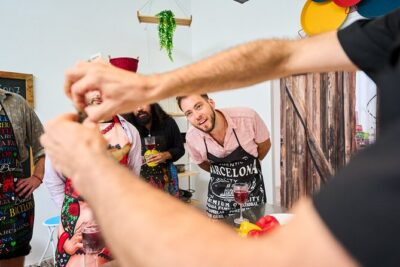
Barcelona Paella Cooking Class with Market Visit, Tapas & Sangria
Read our review →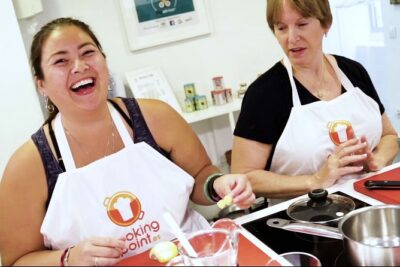
Spanish Cooking Class Paella Tapas and Sangria in Madrid
Read our review →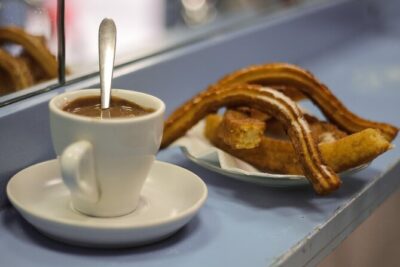
Barcelona Food Tour: Tapas, Paella, Sangria & 8+ Local Tastings
Read our review →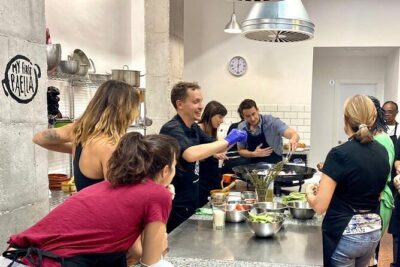
Valencian paella cooking class, tapas and visit to Ruzafa market.
Read our review →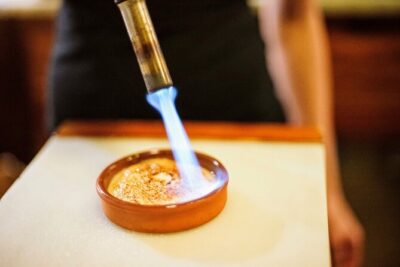
Madrid Tapas & Paella Cooking Experience with Local Market Visit
Read our review →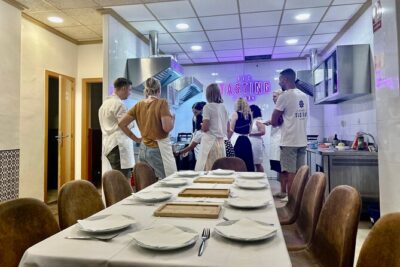
Alicante Paella Cooking Class, Tapas, Drinks and Marketplace
Read our review →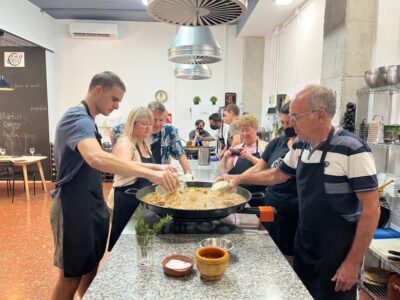
Valencia: Evening Guided Paella Workshop, Tapas, and Drinks
Read our review →